
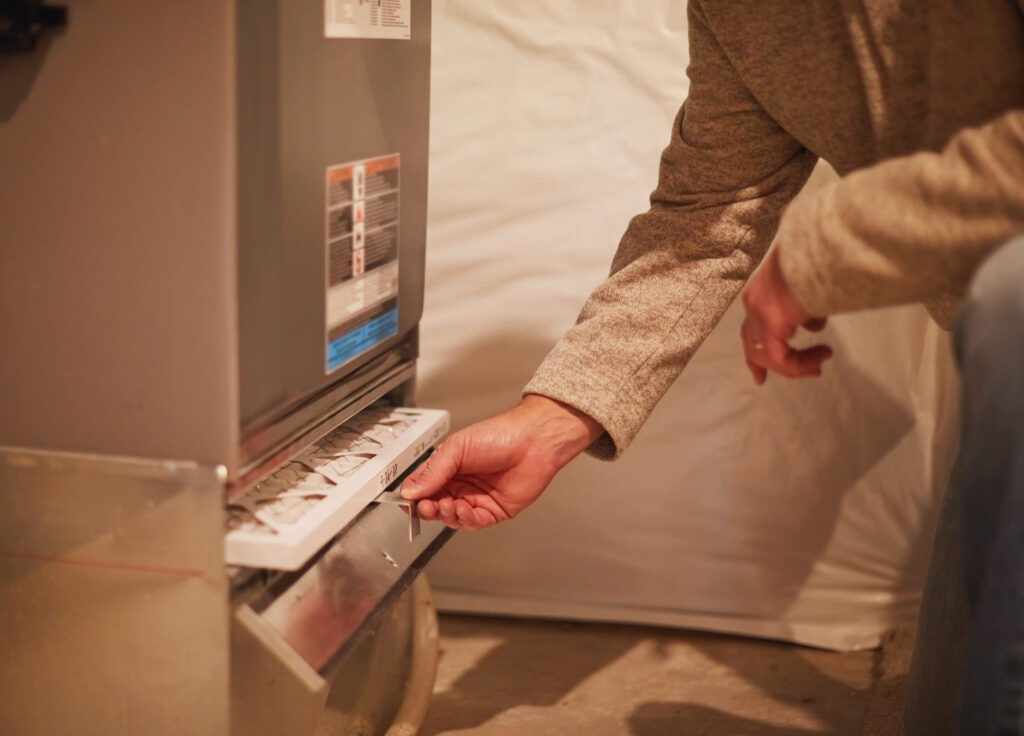
Your furnace filter has been collecting Treasure Valley dust since June. Learn what a clogged filter costs you, how often to change it, and why fall is the time to swap it.
There’s a stretch of about six weeks every fall in the Treasure Valley where your HVAC system barely does anything. The AC finally gets a break sometime in September, and the furnace doesn’t really earn its keep until the mornings turn sharp toward the end of October. In between, the whole system just sits there. That quiet gap is exactly why the furnace filter gets forgotten.
Then a cold front slides in off the mountains, you flip the thermostat over to heat for the first time since spring, and your furnace starts pulling air through a filter that’s been collecting dust since June. It’s one of the cheapest problems in your entire house to solve, and one of the most expensive to ignore.
Magic has served Boise area families since 2013, and along with our heating and air partners at Perfect, we look at a lot of filters this time of year. Here’s what’s actually at stake, and how to handle it in about five minutes.
Why Does the Fall Filter Swap Matter So Much?
Your filter protects two things at once; the air your family breathes and the equipment that moves it. When it clogs, airflow drops, which forces your furnace to run longer and work harder to reach the same temperature. Fall is the natural swap point because your filter has already worked through a full cooling season and is about to work harder still.
There’s more going on than most homeowners realize.
- What does a clogged filter actually do to my furnace? It starves the system of airflow, which causes heat to build up inside the unit instead of moving out into your home. That extra strain wears on components over time and is one of the everyday causes behind most furnace repair calls. A filter costs a few dollars. The repair it prevents does not.
- Will a fresh filter lower my heating bill? Usually, at least somewhat. When airflow is restricted, your furnace runs longer cycles to hit the same thermostat setting, and longer runtime shows up on all your monthly bills from November through February. Restoring proper airflow lets the system heat efficiently instead of fighting itself.
- Why is the Treasure Valley especially hard on filters? Two reasons. Our high desert air carries fine dust year round, and the Boise area has been building at a remarkable pace, which means construction dust drifting through a lot of neighborhoods. If you’re in a newer home in Meridian, Kuna, or Star, drywall and framing dust can load a filter surprisingly fast in the first couple of years.
- What happens the first time I run the heat? Your furnace has been idle since spring, and dust settles inside the system and the ductwork over those months. The first burn pushes some of that accumulated debris out through your vents. Changing the filter before that first cold night, rather than after, will keep a good portion of it from circulating through the house.
- Does it affect the air we’re breathing? It does, especially for anyone in the house with allergies or asthma. A loaded filter stops capturing effectively, so dust and dander recirculate rather than getting trapped. That matters more once the windows are shut for the season and your furnace is moving the same indoor air around all day.
How Do You Change a Furnace Filter?
It’s genuinely a very simple process, and on most systems you won’t even need a single tool.
- Turn the System Off at the Thermostat: There’s no reason to have the blower running while the filter slot is open.
- Find the Filter Slot: It’s usually where the return duct meets the furnace, either a slot on the side of the unit or a large return vent in a wall or ceiling.
- Check the Size Before You Pull It Out: The dimensions are printed right on the cardboard frame, something like 16x25x1. Snap a photo so you’re not guessing in the hardware store aisle.
- Note Which Way the Arrow Points: Every filter has an airflow arrow on the frame, and it should point toward the furnace, following the direction air travels. Installed backwards, it won’t do its job properly.
- Slide the New One In, Arrow First: Then, close everything back up.
- Write the Date on the Frame: A marker and four seconds now saves you from wondering in January.
If you can’t locate your filter slot, or your setup looks nothing like this, that’s worth asking about rather than forcing anything. Just give Magic a call at (208) 877-4544 and our friendly team would be happy to help you out.
How Often Should You Change the Furnace Filter?
It primarily depends on the filter type and what all is going on in your house. Here are reasonable starting points.
- 1-inch fiberglass or pleated filters: every one to three months through heating season
- 4-inch or 5-inch media filters: typically every six to 12 months
- Homes with pets: the shorter end of whatever range applies
- Newer construction or an active remodel: check monthly, since building dust loads filters quickly
- Anyone in the house with allergies: err on the side of changing it early
Honestly though, checking always beats calculating. Pull the filter out, hold it up to a light, and if you can’t see light through it clearly, it’s time to replace it. That takes about 30 seconds and removes all the guesswork.
Is a More Expensive Filter Always Better?
Not necessarily, and this stumps a lot of well-meaning homeowners. Filters carry a MERV rating, and a higher number captures smaller particles. That sounds like an easy call until you factor in airflow.
A high-MERV filter is denser, so it restricts airflow more. Some residential furnaces simply aren’t built to pull air through that much resistance, and forcing them to creates the same airflow problems a clogged filter causes. You end up with cleaner air in theory and a struggling system in practice.
The right filter will ultimately depend on your specific equipment. If you want better filtration for allergies, that’s a completely reasonable goal, and it’s worth a quick conversation about what your system can actually handle. Our expert technicians will explain your options before recommending anything, because we’d rather you understand the tradeoff than just buy the priciest box on the shelf.
What Else Is Worth Handling Before Winter?
The furnace filter is the part you can take care of. Here’s what’s worth having Magic take a look at while there’s still time.
- Schedule a furnace tune-up. A professional tune-up before heating season means your system will be cleaned and inspected before it pushes a whole summer’s worth of dust through your house. It also helps catch the small issues that turn into an emergency call on the coldest night of the year, when everyone else is calling too. Early fall is the easy time to get on the schedule.
- Pay attention to what your furnace is telling you. Higher bills than last year, unfamiliar noises, and rooms that never quite match the thermostat are all worth mentioning. If a fresh filter doesn’t fix uneven heating, something else is going on.
- Think past the furnace. Fall is also when it pays to look at the rest of the house, and Magic handles more than heating and cooling. Our electricians and plumbers take care of the panel that’s been tripping, the outdoor spigot that needs winterizing, and the slow drain you’ve been living with since summer. One call covers it.
Take Five Extra Minutes This Week
Go take a quick look at your filter. Right now, while you’ve got a minute. Hold it up to a light, and if you can’t see through it, you’ve just found the easiest thing you’ll fix all fall.
When you’re ready to have the rest of the system checked before the cold really settles into the valley, we’re here for that too. Magic proudly serves Boise, Meridian, Nampa, Eagle, Kuna, Caldwell, Star, and communities throughout the Treasure Valley. Call (208) 877-4544 or schedule your service online today.