

Did you know that over 80% of electric vehicle (EV) charging happens at home? Plugging in overnight is convenient, cost-effective, and ensures you wake up with a “full tank” every morning. But unlike plugging in a toaster or a TV, installing a dedicated EV charger is a significant electrical project that requires careful planning.
At Magic Electric, Plumbing, Heating & Air, we’ve seen the demand for residential charging stations skyrocket in Twin Falls, ID. While the concept is simple, the technical requirements can be complex. From amperage loads to National Electrical Code (NEC) compliance, getting it right is essential for your safety and your vehicle’s battery health.
If you’re considering making the switch to electric, this guide will walk you through everything you need to know about EV charger installation requirements.
What Are the Different Levels of Charging?
Before reviewing installation requirements, it’s important to determine which type of charger fits your lifestyle. Charger levels vary, and the option you choose determines the scope of electrical work required.
- Level 1 Charging: This is the standard cord that likely came with your car. It plugs into a regular 120-volt household outlet. It requires no special installation, but it is quite slow, adding only 3 to 5 miles of range per hour.
- Level 2 Charging: This is the gold standard for home charging. A Level 2 station operates on a 240-volt circuit (like your dryer) and can fully charge most EVs overnight. This is the type of installation most homeowners need, which requires a dedicated circuit and professional electrical work.
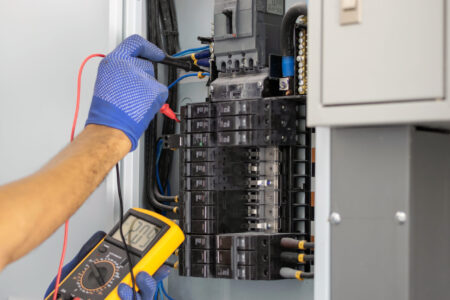
Does Your Electrical Panel Have Enough Capacity?
The most critical factor in your installation is your home’s electrical panel. Your breaker box acts as the brain of your home’s electricity, distributing power to various appliances. Adding a Level 2 EV charger is equivalent to running a new major appliance, like a central AC unit or an electric oven.
Key considerations include:
- Total Amperage: older homes often have 100-amp panels, which may not have enough overhead to support a 30-50 amp EV charger circuit. Modern homes typically have 200-amp service, which is usually sufficient.
- Available Breaker Space: You will need two empty slots stacked vertically for a double-pole 240V breaker.
- Load Calculation: This is where a professional electrician is essential. We perform a “load calculation” to ensure that adding the charger won’t overload your main service line.
If your panel is maxed out, don’t worry. We can often perform a “heavy-up” (panel upgrade) or install a load management system to make it work.
Hardwired vs. Plug-In: Which Setup is Best?
When installing a Level 2 station, you generally have two installation options: hardwired or plug-in. Both deliver 240 volts, but they have different requirements.
- Hardwired Units: These are permanently connected to your electrical wiring. They are generally safer, look cleaner, and can charge at higher speeds (up to 48 amps or more). Because there is no plug to wiggle loose or corrode, they have fewer points of failure.
- Plug-In Units (NEMA 14-50): These plug into a high-powered 240V outlet installed by an electrician. The main benefit is portability. You can unplug the unit and take it with you if you move. However, under recent NEC codes, these outlets often require GFCI breakers, which can sometimes cause “nuisance tripping” with the charger’s internal software.
Do You Need a Permit for Installation?
Yes. In almost every jurisdiction, installing a new electrical circuit for an EV charger requires an electrical permit and a post-installation inspection.
Why is this non-negotiable?
- Safety: An inspector ensures the wire gauge is correct for the amperage and that grounding is secure.
- Insurance: If an unpermitted electrical upgrade causes a fire, your homeowner’s insurance may deny the claim.
- Resale Value: Future buyers may ask for proof of permits for major electrical work.
At Magic Electric, Plumbing, Heating & Air, we handle the permitting process for you, ensuring your installation is fully code-compliant.

Where Should the Charger Be Located?
Location isn’t just about where you park, it affects the cost of installation. The further the charger is from your electrical panel, the more expensive the copper wiring and conduit will be.
Ask yourself these questions:
- Cord Length: Does the charger cable reach the charge port on your car regardless of whether you back in or pull in forward?
- Indoor vs. Outdoor: If you’re installing the charger outside (like in a driveway), you need a unit that is NEMA-4 rated for weather resistance, and the electrical connections must be waterproofed.
Why Hire a Professional Electrician?
While DIY videos exist, EV charger installation is high-voltage work that carries significant risk. An improper connection can damage your vehicle’s onboard charging module or even spark a house fire.
Magic Electric, Plumbing, Heating & Air ensures:
- Proper Wire Sizing: We follow the “continuous load” rule (NEC Article 625), which dictates that wiring must be rated for 125% of the charger’s maximum output.
- Torque Specifications: We use calibrated tools to torque wire connections to the exact manufacturer specifications, preventing loose connections that lead to arcing.
- Future-Proofing: We can help you size your wiring to accommodate future EVs that may charge at faster rates.
Conclusion
Installing an EV charger is an investment in your home and your future mobility. By understanding the requirements you can ensure a smooth process and reliable charging for years to come.
Ready to power up your drive? Contact Magic Electric, Plumbing, Heating & Air today. Our licensed electricians in Twin Falls, ID, are ready to assess your home and provide a seamless, safe installation experience.
EV Charger Installation Requirements Frequently Asked Questions (FAQ)
1. Can I install a Level 2 charger on a normal outlet?
No, a Level 2 charger requires a dedicated 240-volt circuit, similar to what a clothes dryer or electric oven uses. A standard household outlet is only 120 volts.
2. How much does it cost to install an EV charger?
The cost varies based on the distance from your electrical panel to the charging location, whether a panel upgrade is needed, and permitting fees. Simple installations are more affordable, while complex runs through finished walls or trenches will cost more. Contact us for an upfront quote.
3. Do I need to upgrade my electrical panel for an EV charger?
Not always. If you have a 200-amp panel with available space and capacity, you likely do not need an upgrade. However, if you have a 100-amp panel or many heavy electrical appliances, a load calculation performed by an electrician will determine if an upgrade is necessary.
4. How long does the installation take?
Most standard installations can be completed in 2 to 4 hours. If a panel upgrade or significant trenching is required, the project may take a full day.
5. Is a hardwired charger better than a plug-in one?
Hardwired chargers are generally preferred for their safety, reliability, and ability to deliver higher amperage. However, plug-in models offer flexibility if you plan to move soon. We can help you decide which is best for your specific situation.