A plumbing emergency is never a welcome event, but few things strike genuine fear into a homeowner quite like a main-line drain clog. It’s the moment when the problem stops being localized in one sink and starts affecting every drain in your house. When a main-line drain fails, your home’s entire wastewater system grinds to a halt.
The main-line drain, or sewer lateral, is the largest pipe on your property. It’s the critical channel that collects all waste from your toilets, sinks, and tubs, ushering it away to the municipal sewer system or septic tank. Because it manages the entire flow of your home, a blockage here creates a cascading failure across all fixtures.
At Magic Electric, Plumbing, Heating & Air, we know that these deep-seated clogs demand more than a simple plunge or chemical cleaner. They require a professional diagnosis using precise tools and industrial-grade solutions. This guide will walk you through the surprising culprits behind these common but dangerous blockages, show you how to spot the crucial warning signs, and explain the difference between a temporary fix and a permanent solution provided by our expert drain clearing services.
What Essential Role Does the Main-Line Drain Play in Your Home’s Plumbing?
The main-line drain is the central artery of your home’s waste disposal system. It’s a large, unsung hero, typically ranging from three to four inches in diameter. Every single drain connection in your home, from the smallest bathroom sink to the laundry machine connection, ultimately feeds into this one pipe.
The pipe relies entirely on gravity to transport wastewater and solid waste effectively. This means it must maintain a consistent downward slope to ensure continuous flow away from your foundation.
- A main-line clog is the source of all system-wide plumbing misery.
- The blockage acts as a dam, stopping all sewage from leaving the property.
- Since the system is interconnected, the wastewater backs up into the lowest accessible drain points, which are often tubs, showers, or basement floor drains.
Maintaining the integrity of this line is paramount to the safety and hygiene of your home. Any persistent restriction risks a hazardous and costly sewage backup.
What Are the Most Common Culprits Behind Deep Main-Line Clogs?
Main-line blockages are rarely caused by a single, simple event. They usually result from a long-term buildup or an exterior structural issue. The problems can be generally categorized as environmental, material, or structural.
1. The Aggressive Invasion of Tree Roots
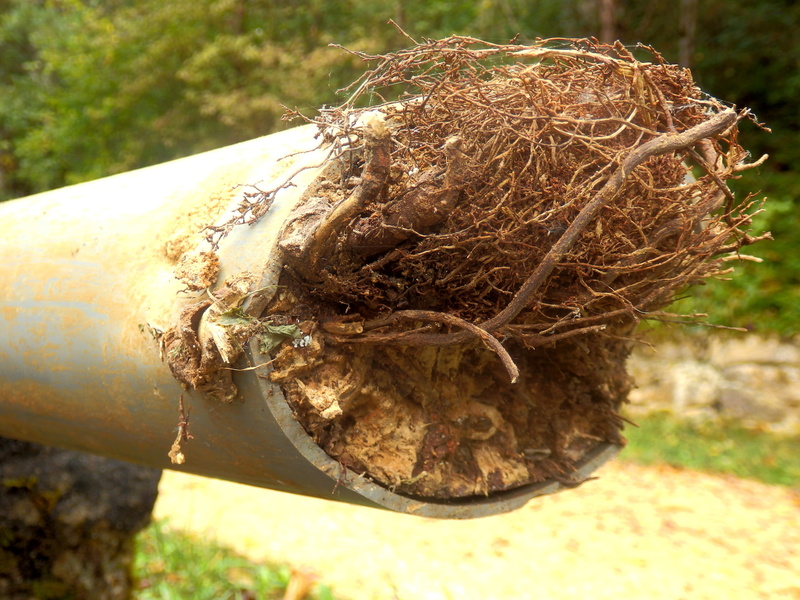
Tree roots are the primary enemy of underground sewer lines, particularly in older properties with clay, concrete, or cast iron pipes.
- Sewer lines naturally emit small amounts of moisture and nutrient-rich vapor through cracks and joints.
- Tree roots aggressively seek out this water source, infiltrating the pipe through even the smallest opening.
- Once inside, the roots grow rapidly, forming a dense, fibrous tangle that acts like a net.
- This root mass is excellent at catching all passing debris, toilet paper, and waste, eventually causing a hard, immovable clog.
- As the roots expand, they worsen pipe cracks, leading to the potential for severe structural failure over time.
2. The Sticky Threat of Fats, Oils, and Grease (FOG)
The everyday practice of rinsing cooking byproducts down the kitchen sink is a silent killer of main-line flow.
- When hot grease or oil is poured down the drain, it flows smoothly until it hits the cooler environment of the underground pipe.
- Upon cooling, the FOG solidifies and adheres to the pipe walls, creating a tacky, non-dissolving coating.
- This sticky layer gradually reduces the interior diameter of the pipe and acts as a glue for hair, soap residue, food particles, and mineral scale.
- Over years, this buildup can create a hardened, rock-solid mass often referred to as a “fatberg,” requiring mechanical cutting or high-pressure water to remove.
3. The Misleading Menace of “Flushable” Wipes
Despite claims on packaging, most disposable hygiene products do not degrade quickly enough in water to be safely flushed.
- Items like wet wipes, paper towels, and certain feminine hygiene products contain materials that are much more durable than standard toilet paper.
- They remain intact in the main line, catching and intertwining with hair, roots, and other debris.
- This accumulation often forms dense, resilient blockages that are too tough for residential-grade drain snakes to penetrate effectively.
4. Structural Issues and Pipe Damage
Sometimes the pipe is simply too damaged to drain effectively, even without debris.
- Misaligned Joints: Ground shifting, poor installation, or soil erosion can cause pipe sections to separate or shift vertically, creating a ledge where solid waste catches.
- Pipe Collapse or Bellies: Extreme external pressure from construction or heavy vehicle traffic can crush a pipe, or a portion of the pipe may sag (create a “belly”) due to soil washout.
- These structural defects allow heavy solid waste to settle and accumulate rather than flow, guaranteeing chronic blockages.
Why Is Professional Drain Clearing Service Required Instead of DIY Solutions?
When you have a serious main-line clog, the problem is deep, complex, and potentially dangerous. Do-it-yourself methods are insufficient and can often worsen the problem or damage your pipes.
Chemical Cleaners are Inadequate and Dangerous
- Ineffectiveness: They’re designed for minor clogs in small branch drains, not for tackling thick root intrusion or hardened grease in a main line.
- Safety Hazards: Caustic chemical cleaners are corrosive and can damage the interior of older pipes, accelerating deterioration.
- Risk to Plumbers: If the chemicals fail to clear the clog, they remain stagnant in the pipe, creating a dangerous and corrosive environment for the professional plumber who must eventually deal with the standing sewage.
Residential Tools Lack the Power and Reach
- Limited Length: Handheld drain snakes or augers purchased at a hardware store are typically too short, only 25 to 50 feet long. Main-line clogs often occur 75 feet or more from the access point near the street.
- No Power: These tools are too weak to cut through dense, established root masses or solid fatbergs. They often just punch a small hole through the center of the clog.
- Temporary Relief: Poking a small hole only provides temporary drainage, and the large clog mass remains intact. This allows debris to catch quickly, leading to a recurrence of the backup.
Professional services from Magic Electric use heavy-duty, commercial-grade equipment and, most importantly, possess the diagnostic tools necessary to understand what they are fighting before they start.
How Can I Be Sure the Clog Is in the Main Line and Not a Single Fixture?
A key indicator that you need to call a professional drain clearing service is the presence of system-wide symptoms. A simple clog in a single sink will not affect your toilet. A main-line clog affects multiple plumbing fixtures simultaneously.
Call Magic Electric, Plumbing, Heating & Air immediately if you notice any of these distinct, multi-fixture warning signs:
- Multiple Fixture Backup: You flush a toilet and water backs up into a different fixture, such as the bathtub, shower, or basement floor drain. This indicates the backup is downstream of where these fixtures connect.
- Loud Gurgling Sounds: You hear excessive gurgling coming from your toilets or other drains, especially when water is draining elsewhere, like in the washing machine or shower. The gurgling is the sound of trapped air struggling to escape past the blockage.
- Backflow at the Cleanout: Sewage is visibly seeping or overflowing from the main sewer cleanout, which is a capped pipe usually located outside near your home’s foundation. This is the definitive sign of a blockage downstream.
- Foul Sewage Odors: A persistent, pungent smell of raw sewage permeates your home, often coming from floor drains or unused fixtures. This happens because gases from the stagnant wastewater cannot escape through the roof vent stack and are forced back inside.
If you observe any of these symptoms, don’t use any plumbing fixtures until a professional arrives. Ignoring these warnings risks a catastrophic sewage spill inside your home.
Why Is Camera Inspection the Crucial First Step in Professional Clearing?
At Magic Electric, Plumbing, Heating & Air, we never attempt to clear a main line blindly. The first and most critical step is a camera inspection service. This step transforms a dangerous guesswork procedure into a precise, targeted repair plan.
The Role of the Inspection
- A flexible fiber optic cable with a high-resolution camera head is inserted through the sewer cleanout access point.
- our technician watches a monitor in real-time, observing the entire length of the pipe.
What the Camera Reveals
- Clog Identification: The camera instantly confirms the nature of the clog: Is it a root ball? Solidified grease? A child’s toy? This allows our technician to select the exact right tool for the job.
- Location Pinpointing: It provides the precise location and depth of the blockage, eliminating the need to blindly snake the entire line.
- Pipe Integrity: Most importantly, the camera reveals the structural condition of the pipe. It identifies severe cracks, misalignments, or deterioration.
If the pipe is cracked or compromised, a powerful tool like hydro jetting could potentially cause damage. The camera inspection provides the information needed to safely choose between mechanical snaking, hydro jetting, or recommending a necessary pipe repair before any clearing begins. It ensures the job is done right and safely the first time.
Which Method Offers the Long-Term Solution: Mechanical Snaking or Hydro Jetting?
When it comes to restoring the flow in a main sewer line, our professionals use two industrial methods: mechanical snaking and hydro jetting. While both clear a blockage, they are designed for different outcomes.
Mechanical Drain Snaking (Reactive Clearing)
Mechanical snaking involves using a heavy-duty, powered cable with a cutting head attached.
- The snake is fed into the pipe and spins, cutting a hole through the physical mass of the clog.
- This method is excellent for reactionary clearing, getting water flowing again fast.
- However, it only removes the core of the blockage. It leaves behind significant residue, grease, and mineral scale on the pipe walls.
- Because the pipe walls remain sticky and rough, a clog caused by grease or roots will often recur within a few months, turning it into a temporary fix.
Hydro Jetting (Preventative Cleaning)
Hydro jetting utilizes a powerful machine that delivers a highly focused stream of water at pressures up to 4,000 PSI through a specialized nozzle.
- This is not just clearing; it is comprehensive cleaning.
- The high-pressure stream scourers the entire internal circumference of the pipe.
- It completely eliminates all traces of hardened grease, built-up mineral scale, sludge, and soap scum, restoring the pipe to a near-original, smooth diameter.
- For tree roots, it blasts the entire root mass and scours the pipe, delaying future root regrowth much longer than snaking.
For any home experiencing recurring clogs or dealing with FOG and root issues, hydro jetting is the ultimate long-term solution. It addresses the root cause of the buildup, maximizing flow and minimizing future service calls. Your Magic Electric technician will always recommend the best solution based on the camera inspection findings.

What Simple Steps Can Homeowners Take to Prevent Future Main-Line Clogs?
While professionals can fix the problem, preventing the next one is up to you. Implementing a few simple, daily habits can drastically reduce the chances of a main-line emergency.
1. Practice Strict Waste Management
The only things that should ever be flushed down a toilet are human waste and standard toilet paper.
- Never flush any type of wipe, regardless of its “flushable” label.
- Never flush paper towels, facial tissues, dental floss, cotton balls, or hygiene products.
- These items should always be thrown into a wastebasket.
2. Control Fats, Oils, and Grease (FOG)
FOG should never go down any drain, sink, or garbage disposal.
- Allow used cooking grease and oil to cool and solidify.
- Scrape the solidified grease into a sealed container (like an old coffee can) and dispose of it in the regular trash.
- Wipe down greasy plates and pans with a paper towel before washing them to minimize residue entering the drain.
3. Install Drain Protection
Use simple, inexpensive strainers or mesh covers in all your sink, shower, and bathtub drains.
- These strainers will effectively catch hair, soap particles, and other debris.
- Empty these strainers frequently into the trash to prevent the material from building up.
4. Be Smart About Landscaping
If your home has known issues with root intrusion, be mindful of what you plant near your sewer line’s path.
- Avoid planting aggressive, fast-growing, water-seeking trees like willows, aspens, or certain maples near the underground line.
- Consult with a professional if you suspect nearby mature trees are a threat to your pipes.
5. Schedule Preventative Maintenance
For older homes or properties with a history of recurring problems, consider scheduling a preventative hydro jetting service.
- Performing a deep clean every year or two will remove nascent root growth and slow-forming grease buildup.
- This routine maintenance catches problems before they become costly emergencies.
Conclusion
A main-line drain clog is a serious symptom of a deeper problem, be it invasive tree roots, years of grease accumulation, or structural pipe failure. Recognizing the warning signs and acting swiftly is essential to protecting your home from extensive sewage damage.
While you may feel the urge to try a DIY fix, these problems are simply too large and too deep for household tools or chemicals. Only a professional drain clearing service, armed with diagnostic camera inspection and powerful cleaning methods like hydro jetting, can provide a safe, effective, and long-lasting solution.
At Magic Electric, Plumbing, Heating & Air, our experts are equipped to diagnose the exact cause of your blockage and restore your system’s flow with guaranteed results. Don’t wait for the water to back up; secure your peace of mind and the integrity of your home.
Contact Magic Electric, Plumbing, Heating & Air for your plumbing, heating, air, and electrical repair needs. Schedule a professional drain clearing service with one of our expert technicians today!
Main-Line Drain Clogs: Frequently Asked Questions (FAQ)
What is the most common cause of a clogged main sewer line?
The single most common cause of a clogged main sewer line is tree root intrusion, especially in properties with older clay or cast iron pipes. Tree roots are naturally attracted to the water and nutrients inside the sewer line and enter through tiny cracks or loose joints. Once inside, they proliferate, catching debris like toilet paper and non-flushable items, which quickly leads to a complete, stubborn blockage. Following root intrusion, Fats, Oils, and Grease (FOG) buildup and the flushing of wet wipes are the next most frequent culprits for main-line clogs.
How long does a main-line drain clearing service take?
A typical professional drain clearing service, including the necessary preliminary camera inspection, can usually be completed within one to three hours. The exact duration depends heavily on the nature and severity of the clog. A soft blockage cleared by a standard auger may be faster. However, a tough clog requiring high-pressure hydro jetting, especially one involving thick tree roots or hardened grease, will require more focused time to ensure the pipe is thoroughly cleaned and flow is fully restored. Our professionals also always inspect the line post-clearing to confirm the obstruction is completely gone.
Is hydro jetting safe for older pipes, or will it cause damage?
Hydro jetting is a highly effective cleaning method, but it is not safe for all older or severely damaged pipes without proper assessment. The high-pressure water stream can exacerbate existing issues in pipes that are brittle (like old clay), severely corroded (cast iron), or cracked. This is precisely why a professional drain clearing service must always begin with a camera inspection. Our technician will assess the pipe’s material and condition. If the pipe is deemed too weak or compromised, they will opt for a less aggressive method, such as mechanical snaking, or recommend a more permanent pipe repair or replacement before attempting the deep cleaning.
What is the difference between “Drain Clearing” and “Drain Cleaning”?
While the terms are often confused, professionals define them distinctly:
Drain Clearing (Snaking/Augering): This is a reactionary service aimed at opening a pipe. It uses a mechanical auger (snake) to cut a hole through the blockage, restoring flow. It is a quick fix, but it leaves behind grease, scale, and residue on the pipe walls, which can lead to the clog recurring quickly.
Drain Cleaning (Hydro Jetting): This is a comprehensive, preventative service. It uses high-pressure water to scour and wash away all accumulated material, grease, sludge, scale, and roots, from the entire circumference of the pipe walls. It restores the pipe to its maximum diameter and is the long-term solution for recurring issues.