There is nothing quite like the shock of turning on your morning shower, expecting a warm wake-up call, and being hit with a blast of ice-cold water. Here in the Treasure Valley, where winter temperatures frequently dip below freezing, losing your hot water isn’t just an inconvenience—it’s an emergency.
If you need emergency water heater repair in Boise, ID, fast action matters—especially during our freezing winters. From sudden leaks and strange noises to complete hot water loss, this guide helps homeowners identify urgent warning signs, troubleshoot common issues, and decide when to call a professional. Learn what causes water heater failures, how hard water impacts your system, and when repair or replacement makes the most sense. And if these solutions don’t get the hot water flowing, then our Boise emergency plumbing team is ready to help.
Is My Water Heater Malfunction an Emergency?
How do you tell the difference between a minor annoyance and a plumbing disaster? Start by checking for specific physical and operational warning signs in your tanked or tankless water heater.
From Ada County to Canyon County and beyond, winter cold can be bitter—especially in the morning and evening. When your hot water disappears in those cold hours, it’s more than an annoyance—it can be a real concern for families with young kids or elderly residents. If your system isn’t delivering hot water, you need help quickly, but that doesn’t always mean extensive repairs. In many cases, a quick check can reveal a straightforward fix.
Physical Signs You May Need Emergency Water Heater Repair
- Flooding and Pooling (Tanked Units): If water is pooling around the base of your tanked unit, this is an active emergency. It often indicates that the tank’s inner lining is corroded. Because the tank is under constant pressure, a small leak can quickly become a catastrophic burst, dumping dozens of gallons of water into your home. In many Boise-area homes with finished basements, this kind of leak can cause thousands of dollars of damage within minutes. If you see standing water, shut off the water supply and contact a professional immediately.
- Internal Leaks (Tankless Units): Tankless water heaters don’t store large amounts of water, so there’s no large reservoir to burst. That said, a leak near the heat exchanger or water valves can still cause significant electrical damage to the unit’s sensitive internal circuitry or lead to mold growth behind the unit. Check for leaks specifically near the heat exchanger or water inlet/outlet valves.
- Condensation (Both Systems): If you see a small amount of moisture, don’t panic immediately. For both tanked and tankless gas units, “sweating” can occur when cold water meets the heat of the burner—especially during a Southwest Idaho winter. If the moisture only appears while the unit is running and then dries up, it’s likely normal condensation. However, if the water is constant, dripping from the internal cabinet, or pooling while the unit is idle, you have a true leak.
Warning Signs of Water Heater System Failure
- Gas Smells (Both Systems): If you smell sulfur or rotten eggs near your water heater or its venting pipes, leave the house immediately and call your gas company or emergency services. For tanked units, this usually indicates a leak in the supply line or a back-drafting vent. For tankless units, which use high-powered fans, a gas smell could indicate a cracked internal seal or a compromised exhaust pipe. Do not try to fix this yourself.
- Strange Noises (Tanked Units): Your water heater’s grumblings shouldn’t include popping, banging, or rumbling sounds. These noises actually indicate severe sediment buildup. This type of buildup is extremely common in Boise, Meridian, Nampa, and Caldwell, where mineral-heavy water accelerates sediment accumulation inside tank systems. The loud popping, banging, and rumbling noises occur when steam bubbles explode through the layer of mineral deposits at the bottom of your tank.
- Strange Whistling (Tankless Units): A high-pitched “tea kettle” whistling or a loud mechanical grinding often signals a scale-clogged heat exchanger or a failing internal fan.
- Zero Hot Water: In a traditional tank, this often means a failed heating element or an extinguished pilot light. If you have a tankless system, “zero hot water” is usually triggered by a system-safe shutdown due to a blocked vent or a scale-clogged heat exchanger that can no longer sense water flow.
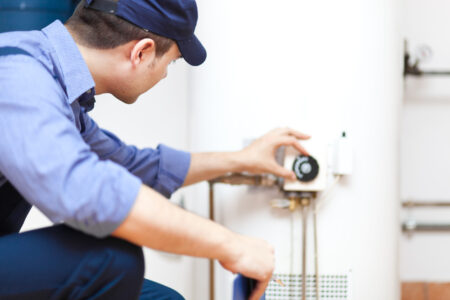
What Should I Check Before Calling a Plumber for an Emergency Water Heater Repair?
Before you pick up the phone, play detective. You might save yourself a service call by checking these common culprits:
1. Check the Power Source
For electric tanked units, check your electrical panel for a tripped “Water Heater” breaker. For gas tankless units, ensure the unit is plugged in and that the GFCI outlet (the one with the “reset” button) hasn’t tripped, as these systems require electricity to power the sensors and igniter. If a breaker or outlet trips again immediately after being reset, you likely have an electrical short and need a professional.
2. Inspect the Pilot Light (Gas Heaters)
If you have an older gas tank unit, remove the access panel at the bottom to see if the small blue pilot flame is burning. If it’s out, follow the manufacturer’s instructions on the sticker to relight it. For tankless systems or modern “power-vent” tanks, you won’t see a standing pilot light. Instead, look at the digital display for an “Ignition Failure” error code. This could mean your gas supply is off, the igniter is dirty, or your exterior vents are blocked.
3. Adjust the Thermostat
Ensure the thermostat on the unit hasn’t accidentally been bumped to the “Vacation” or “Low” setting. On a tankless unit, check the digital control pad to ensure the target temperature hasn’t been lowered. Ideally, it should be set between 120°F and 140°F.
Why Do Boise Water Heaters Fail So Often?
You might wonder why your neighbor in Meridian and your cousin in Nampa are all having water heater issues at the same time. The answer often lies in our water supply.
All across the Treasure Valley—throughout Boise, Meridian, Eagle, Star, and Kuna, ID—it’s likely that you have hard water, which means it contains high levels of dissolved minerals like calcium and magnesium. Whether you have a traditional tanked or a modern tankless system, these hard minerals are your equipment’s enemy.
How Mineral Sediment and Scale Can Lead to Emergency Water Heater Repair
- Insulation: In tanked models, heavy sediment settles at the bottom, acting as a barrier between the burner and the water. In tankless models, mineral scale “plates” the internal heat exchanger coils. In both cases, this creates an insulating layer that forces the unit to run longer and hotter just to reach your desired temperature.
- Overheating: This extra work causes internal components to overheat. For tanks, this creates “hot spots” that stress the steel shell; for tankless units, the heat exchanger can overheat and warp or crack because the scale prevents the flowing water from cooling the metal properly.
- Corrosion: Once the internal protective lining of a tank or the copper/stainless steel of a tankless heat exchanger is compromised by this heat stress, leaks will develop. While a tank leak often leads to a flooded floor, a compromised tankless unit usually results in a total system failure and the need for a replacement.

Repair vs. Replace: Which is Right for You?
When servicing a struggling water heater, our team provides a transparent, upfront assessment so you can make the best choice for your home—both now and long-term.
While every situation is unique, it can help to know the general rules of thumb that can help guide repair vs. replacement decisions:
- The 50% Rule: If the cost of the repair is more than 50% of the cost of a new unit, replacement is almost always the better investment.
- The Service Life Timeline: Most tanked water heaters last 8–12 years. If your tank is over 10 years old and needs a major repair, replacement is usually the smarter move. Tankless units, however, can last up to 20 years. If your tankless unit is only 10 years old, a repair is often still a great investment to get another decade of use.
- Frequency of Breakdowns: If you’ve had to call us for the same unit twice in the last year, it’s a sign that the system is failing. Constant repairs are often more expensive than a monthly payment on a new, high-efficiency model.
Why Choose Magic Electric, Plumbing, Heating & Air?
We know you have options in the Treasure Valley, but we believe in providing service so good, you’ll believe in magic. Here is why Boise homeowners trust us with their emergency repairs:
- Upfront Pricing: You will know the exact cost of the repair before we lift a wrench. No hidden fees, no surprises.
- Same-Day Service: We understand that hot water is a necessity, not a luxury. We strive to get your system running the same day you call.
- Full-Spectrum Expertise: Because we handle plumbing, heating, air, and electrical services, we can fix your water heater regardless of whether the issue is a pipe leak, a gas valve failure, or a fried tankless circuit board.
At Magic Electric, Plumbing, Heating & Air, we’re dedicated to providing fast, honest solutions that get your hot water flowing.
Get Your Hot Water Back on Track
Losing hot water can disrupt your entire routine, but it doesn’t have to ruin your week. Whether it’s a simple pilot light fix on a traditional tank or an emergency heat exchanger replacement on a tankless system, you need a team that acts fast and communicates clearly. Whether you’re located in Downtown Boise, near Boise State University, or in surrounding communities like Meridian and Eagle, our recommendations are tailored to local water conditions and the seasonal demands of our beautiful Treasure Valley.
With a professional tune-up or repair, we’ll address the root cause of the problem and help your system run reliably through the coldest Boise months. Don’t settle for cold showers; let our experts restore your comfort today!
👉 Schedule a Repair for Your Tanked Water Heater
👉 Schedule a Repair for Your Tankless Water Heater
👉 Schedule Maintenance for Your Tanked Water Heater
👉 Schedule Maintenance for Your Tankless Water Heater
Emergency Water Heater Repair: Frequently Asked Questions
Q: Can a water heater explode?
A: While rare, it is possible. If the pressure relief valve is blocked and the thermostat fails, pressure can build up inside the tank. If you hear a high-pitched whistling sound or see the tank bulging, turn off the power and water supply immediately and call a professional.
Q: Why does my hot water run out so fast?
A: This is a classic sign of sediment buildup in the tank, which takes up space that should be filled with hot water. It could also indicate a broken dip tube or, in electric models, a failed lower heating element.
Q: Is a tankless water heater better for Boise homes?
A: Tankless heaters are more energy-efficient and provide endless hot water, which is great for large families. However, they require a larger upfront investment and may need water softening treatment to prevent mineral buildup from Boise’s hard water.
Q: How often should I flush my water heater in Boise?
A: Due to the mineral content in our local water, we recommend flushing your tanked water heater at least once a year. This removes sediment and can significantly extend your unit’s lifespan. For tankless water heaters, we recommend descaling your system once a year to help protect your system. Because of the hard water across Treasure Valley, ID, your system may need to be flushed or descaled more frequently.
Q: What is the Magic Care Club?
A: The Magic Care Club is our membership program that offers homeowners peace of mind. Members receive priority scheduling, waived dispatch fees, and exclusive discounts on plumbing, electrical, and HVAC repairs and installations.