

Imagine stepping into your Boise utility room only to find a soggy carpet or a massive puddle around your water heater. Because traditional tanked water heaters store 40 to 50 gallons of water at all times, a sudden failure is more than a nuisance—it’s a ticking time bomb for water damage, mold growth, and expensive home repairs. At Magic Electric, Plumbing, Heating + Air, we know that speed is everything when a large tank is involved, which is why we’ve created this immediate action plan to protect your Treasure Valley home.
This guide specifically focuses on tanked water heater leaks, providing a step-by-step emergency response to stop the flow before it becomes a flood. We will cover how to confirm the source of the leak, perform an emergency shut-off, and decide between a repair and a full system replacement for your Idaho home.
Tank vs. Tankless: Why We’re Focusing on Tanked Systems
When discussing water heater leaks, it’s important to know which system you have, as the risks and repair needs differ significantly:
- Tanked Water Heaters: Tanked water heaters store 40–50 gallons of hot water at all times. Because they are constantly holding a large volume of water, they are prone to internal corrosion and catastrophic “flood” leaks if the tank fails. This guide focuses on tanked systems because they require immediate emergency action to prevent major water damage.
- Tankless Water Heaters: Also known as “on-demand” systems, tankless water heaters don’t store water. While they can still leak from internal components or scale buildup, they rarely present the same “flood” risk as a traditional tank.
If you have a traditional tank in your Treasure Valley home, follow the steps in this guide to help protect your property from leaks and flooding risk.
Is Your Water Heater Actually Leaking?
Before you start turning valves, confirm the source. Not every puddle means your tank has failed.
- Check for Condensation: In cold Ada County basements, condensation can form on the tank and drip down. Wipe it and wait; if it stays dry, it’s just “sweat.”
- Look at the Pipes: Check the supply lines. A loose joint in Eagle or Meridian can drip onto the heater, mimicking a tank leak.
- Inspect the Drain Pan: If the pan is full, it usually indicates a slow, persistent water heater leak.
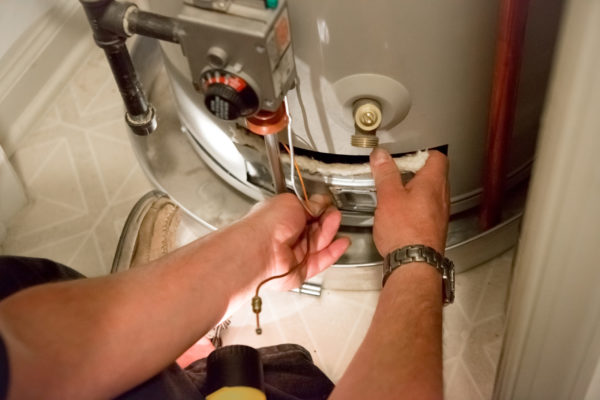
Immediate Emergency Steps for Water Heater Leaks
If your water heater is leaking and the water is actively flowing, you must act fast. Whether your home is in Caldwell, Emmett, or Hidden Springs, you must take these steps to secure the safety of your property.
- Turn Off the Water Supply: Locate the cold water shut-off valve above the water heater. It typically has a lever (ball valve) or a round wheel (gate valve).
- Lever: Turn it perpendicular to the pipe.
- Wheel: Turn it clockwise until it stops.
- Can’t find it? Shut off your home’s main water valve to stop all water flow.
- Shut Off the Power Source: Heating elements can burn out if the tank drains while they are on, and gas can be a hazard.
- Electric Heaters: Go to your circuit breaker panel and flip the breaker labeled “Water Heater” to OFF.
- Gas Heaters: Locate the gas dial on the thermostat unit (at the bottom of the tank) and turn it to “OFF” or “Pilot.”
- Drain the Tank (If Necessary): If the leak is severe, attach a garden hose to the drain valve and run it to a floor drain or outside. Be sure to exercise caution: The water will be scalding hot.
- Call for Professional Help. Once the water and power are safely disconnected, the immediate threat to your home is contained. Now is the time to call in the professionals to diagnose the damage and determine if your system can be salvaged or if a replacement is necessary to keep your home dry.
At Magic Electric, Plumbing, Heating + Air, we proudly serve our neighbors in Southwest Idaho. As fellow community members, we dispatch from the heart of Treasure Valley to deliver fast, efficient, and affordable solutions. We also provide emergency service for water heater leaks.
Where Is the Leak Coming From?
Once you’ve contained the initial mess, playing detective can save you time and money. Identifying the specific source of water heater leaks allows you to give our technicians a “head start” when we arrive at your home.
Check these leak-prone areas:
- The Top (Inlet/Outlet): Often loose connections or a failed anode rod port.
- The Side (T&P Valve): The Temperature and Pressure valve releases excess pressure. If it’s dripping, the pressure may be too high, or the valve is faulty.
- The Bottom (Drain Valve): May leak due to sediment or a worn washer.
- The Tank Itself: If water seeps through the metal casing, the internal lining is likely cracked. This usually means the unit must be replaced.
Pinpointing the location is the first step in determining if your system can be saved or if it’s time to look at a more reliable upgrade for your utility room.
Why Did My Water Heater Fail?
It’s rarely a case of “bad luck.” Most water heater leaks in the Boise area are caused by predictable environmental factors. Understanding the “why” can help you prevent the same issue from happening with your next unit.
Your water heater typically wears out from these factors:
- Internal Corrosion: Anode rods eventually wear out, leaving the steel tank vulnerable to rust.
- Sediment Buildup: In areas like Nampa and Caldwell, hard water minerals settle at the bottom, causing the tank to overheat and crack.
- High Water Pressure: Pressure above 80 psi puts massive strain on your plumbing. According to the Environmental Protection Agency (EPA), “your water-using fixtures will operate best if your home’s incoming water pressure is between 45 and 60 pounds per square inch (PSA).”
- Old Age: Most tanks last 8–12 years. If yours is in this range, a leak often signals the end of its life.
Should I Repair or Replace My Water Heater?
When you discover water heater leaks, the big question is always: “Can I fix this, or is it time for a new one?” At Magic Electric, Plumbing, Heating + Air, we believe in providing honest advice based on the condition of your unit and the safety of your Boise home.
Repair is likely if:
- The leak is from a loose pipe connection.
- The T&P valve is faulty, but the tank is sound.
- The unit is less than 6–8 years old.
Replacement is likely if:
- The actual storage tank is leaking (corrosion).
- The unit is over 10 years old.
- Repair costs exceed 50% of a new unit’s price.
Making the right choice now can prevent a second emergency down the road. Our team can help you weigh the costs to ensure you get the best value for your Treasure Valley property.

How Can Professional Maintenance Prevent Future Floods?
The best way to manage a flood is to make sure it never happens. Be certain to ensure the comfort and safety of your water heater with this essential maintenance:
- Annual Flushing: Removes sediment that causes overheating.
- Anode Rod Inspection: Replacing this rod can double your tank’s lifespan.
- Pressure Checks: We can install expansion tanks to reduce strain.
- Leak Detection: Modern smart devices can alert your phone the second moisture is detected.
By staying proactive with your plumbing, you can protect your basement and extend the life of your equipment in areas like Nampa, Meridian, or Eagle. Investing in a little maintenance today is the smartest way to avoid the stress and expense of a sudden plumbing disaster tomorrow. Our trained plumbers are here to help with all of your water heater needs, from leak detection and tune-ups to repairs and installations.
Why Choose Magic Electric, Plumbing, Heating & Air?
When you’re dealing with water damage and plumbing repairs, you need a team you can trust. Magic Electric, Plumbing, Heating & Air serves the Twin Falls and Jerome areas with top-tier craftsmanship and honest pricing.
- Prompt Service: We understand that a leak is an emergency.
- Expert Diagnostics: We don’t just patch the problem; we find the root cause.
- Upfront Pricing: No hidden fees or surprise bills.
- Comprehensive Care: From electrical safety to plumbing integrity, we handle it all.
Ready to Stop the Leak and Protect Your Home?
A water heater leak is more than a plumbing issue; it’s a threat to your home’s safety and your family’s comfort. Don’t let a small drip turn into a Treasure Valley flood. Whether you need a rapid repair or a high-efficiency replacement, getting the right solution now saves you thousands in water damage repairs later.
Trust the local experts who know Boise’s hard water challenges best. We’ll get your hot water back and your floors dry—don’t wait!
👉 Keep Your Home Safe with a Water Heater Tune-Up
Magic Electric, Plumbing, Heating + Air, Your Partner for a Safer, Dry Home in the Boise Area
Water Heater Leaks Frequently Asked Questions (FAQ)
Is a leaking water heater an emergency?
Yes, it’s often considered an emergency. Even a small leak can escalate quickly, leading to significant water damage, mold growth, or electrical hazards. If the leak is uncontainable, shut off the water and call a professional immediately.
Can a water heater explode if it leaks?
It is extremely rare, but if a leak is caused by extreme pressure and the T&P valve is blocked, a rupture can occur. If you hear loud popping or rumbling, turn it off immediately.
How much water does a water heater hold?
Usually 40 to 50 gallons. If it bursts, that’s 50 gallons of hot water on your floor, followed by a continuous flow from your water main until shut off.
Can I still use water if my water heater is leaking?
If you have shut off the valve to the water heater, you can still use cold water fixtures in the rest of your house. However, you will not have hot water until the unit is repaired or replaced.
Does homeowners insurance cover water heater leaks?
Insurance typically covers the resultant damage (floors/drywall) but rarely the cost of the appliance itself if the failure was due to age or lack of maintenance.