
If you live in Boise, you know that our weather can be as unpredictable as it is beautiful. One minute it’s sunny, and the next, a summer storm is rolling through the Treasure Valley. These storms are often accompanied by the threat of lightning and power fluctuations. But did you know that the weather isn’t the only threat to your home’s electrical system? In our modern, technology-driven world, our homes are packed with sensitive electronics, from smart refrigerators to home offices, that demand a steady, clean flow of electricity.
At Magic Electric, Plumbing, Heating & Air, we regularly help homeowners who are surprised to discover that their expensive appliances are vulnerable not just to outdoor storms, but to power cycling occurring within their own walls. Whether you’re dealing with flickering lights, tripping breakers, or you simply want to fortify your home against voltage spikes, understanding the basics of surge protection and electrical repair is necessary. In this comprehensive guide, we’ll walk you through everything you need to know to keep your Boise home safe, efficient, and powered up.
What Are the Real Causes of Power Surges in Boise Homes?
When most people hear “power surge,” they often picture a lightning strike hitting a telephone pole down the street. While this is certainly a dramatic and destructive cause, it’s actually the least common source of daily voltage spikes. Understanding where these surges come from is the first step in protecting your property.
The External Threats
External surges originate from outside your home. In Boise, these are often caused by:
- Lightning Strikes: Direct or nearby strikes can send massive amounts of energy rushing into your home’s wiring.
- Grid Switching: Utility companies frequently switch grids to manage power loads, which can cause sudden spikes.
- Downed Power Lines: Accidents or storms that damage infrastructure can send erratic voltage into the neighborhood grid.
The Internal Threats (The Silent Culprits)
Surprisingly, roughly 80% of all power surges are generated inside your home. These are known as “transient” surges. Every time a high-powered device, such as your air conditioner, furnace, laundry machine, or refrigerator, motors on or off, it creates a small surge.
While these internal surges might not blow out your TV instantly, they act like “electrical termites.” Over time, they degrade the delicate circuit boards in your LED lights, smart appliances, and computers, leading to premature failure. If you’ve ever had an appliance die years before it should have, internal surges were likely the invisible cause.

Why Is “Layering” Your Surge Protection Critical?
A common misconception among homeowners is that a simple power strip purchased at a big-box store is enough to protect their investments. While point-of-use strips are helpful, they’re only one piece of the puzzle. To truly secure your home, you need to think in terms of “layers.”
Layer 1: Whole-Home Surge Protection
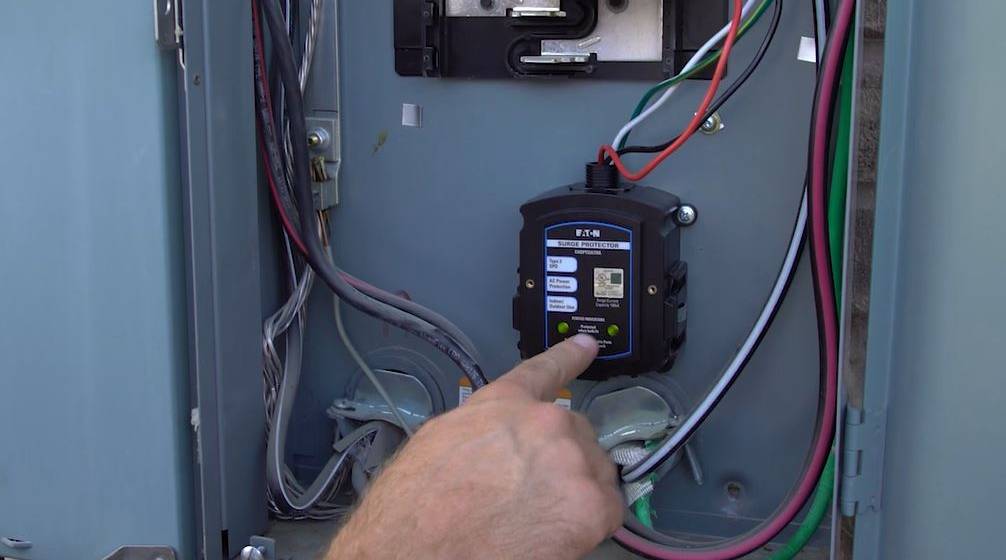
This is your first line of defense. A whole-home surge protector is a device installed directly at your main electrical panel by a licensed electrician. It acts as a gatekeeper for all the electricity entering your home. If a massive surge from the city grid or a lightning strike attempts to enter, this device detects the spike instantly and diverts the excess voltage into the ground, away from your wiring.
Layer 2: Point-of-Use Protection
This is where your high-quality power strips come in. They protect sensitive electronics from the residual voltage that might slip past the main panel or, more importantly, from the internal surges generated by other appliances on the same circuit.
The “Shared Circuit” Danger
Imagine you have a high-end gaming computer plugged into the same circuit as a window air conditioner. When that AC unit kicks on, it sends a surge down the line. Without protection, that surge travels directly to your computer. A whole-home system combined with point-of-use strips ensures that your devices are protected every connection point.
How Do You Know If You Need Electrical Repair?
Surge protection is preventative, but what if your electrical system is already showing signs of wear and tear? Ignoring minor electrical issues can lead to major safety hazards, including electrical fires. If you notice any of the following signs in your Boise home, it’s time to call the professionals at Magic Electric, Plumbing, Heating & Air.
Are Your Circuit Breakers Tripping Frequently?
Your circuit breaker is a safety device designed to cut power when a circuit is overloaded. If you find yourself constantly resetting a breaker, this is a warning. It could mean your appliances are drawing more power than the circuit can handle, or there’s a short circuit in the wiring.
Do You Hear Buzzing or Humming Sounds?
Electricity should be silent. If you hear a buzzing sound coming from an outlet, a switch, or your main panel, it usually indicates loose wiring or a faulty connection. Loose wires can arc, creating heat and eventually sparking a fire.
Are Your Outlets Warm or Discolored?
Place your hand near your outlets (without touching the sockets directly). They should feel cool to the touch. If a switch plate feels warm, or if you see scorch marks or brown discoloration around the slots, stop using that outlet immediately and call a professional. This is a sign of severe overheating.
Do Your Lights Flicker or Dim?
If your kitchen lights dim every time the refrigerator turns on, your electrical system is struggling to handle the load. This might require a dedicated circuit installation or an upgrade to your main electrical panel to support modern demand.
How Does Whole-Home Surge Protection Actually Work?
The concept might sound technical, but the mechanism is quite brilliant in its simplicity. Think of your electrical system like a water supply. The voltage is the water pressure. Your appliances are designed to handle a specific pressure.
A whole-home surge protector, installed at your breaker panel, monitors this “pressure” millions of times per second.
- Detection: When the voltage spikes above a safe level (the surge), the device detects the anomaly immediately.
- Diversion: Instead of letting that excess “pressure” burst your pipes (your wires and appliances), the surge protector opens a valve (the pathway to the ground).
- Restoration: The dangerous excess energy is safely flushed into the ground rod outside your home, while the normal, safe voltage continues to flow to your appliances uninterrupted.
This process happens so fast that your lights won’t even flicker, yet your home is saved from potentially thousands of dollars in damage.
Why Is Professional Installation Required?
You might be handy around the house, but electrical panel work is dangerous and complex. Installing a whole-home surge protector involves working with live electricity at the main service entry.
Safety First
One wrong move at the breaker panel can result in severe injury or electrocution. Our licensed electricians have the safety gear and training to work on live panels safely.
Code Compliance
Boise has specific electrical codes that must be followed. An improper installation can not only fail to protect your home but can also violate local building codes, which can cause issues if you ever decide to sell your home.
Warranty Protection
Many surge protection devices come with warranties that cover connected equipment damage. However, these warranties are often void if the device was not installed by a licensed professional. When you choose Magic Electric, Plumbing, Heating & Air, you ensure your warranty remains valid.
What Are the Long-Term Benefits of Surge Protection?
Investing in surge protection is arguably one of the most cost-effective home improvements you can make. The upfront cost is a fraction of what you would pay to replace a fried HVAC system.
- Extended Appliance Lifespan: By smoothing out the constant internal mini-surges, your appliances experience less wear and tear.
- Reduced Fire Risk: Surges can damage the insulation on wires inside your walls, leading to arcing and fires. Protection mitigates this risk.
- Peace of Mind: You can’t control the Boise weather or the power grid, but you can control how your home reacts to it. Knowing your investment is safe offers invaluable peace of mind.
Why Choose Magic Electric, Plumbing, Heating & Air?
When it comes to the safety of your home and family, you need a partner you can trust. Magic Electric, Plumbing, Heating & Air has built a reputation in the Boise area for reliability, transparency, and excellence.
- Upfront Pricing: We don’t believe in surprises. You will know the exact cost of the job before we start any work.
- Licensed Experts: Our team consists of fully licensed, insured, and highly trained technicians who stay up-to-date on the latest safety standards.
- Local Focus: We are locally owned and operated. We understand the specific electrical challenges Boise homeowners face, from older wiring in historic homes to modern demands in new developments.
- Same-Day Service: Electrical issues can’t wait. We strive to be there when you need us most.
Conclusion
Your home’s electrical system is the heartbeat of your daily life. It powers your comfort, your entertainment, and your connection to the world. Don’t leave it vulnerable to the whims of the weather or the invisible damage of internal power surges. By investing in whole-home surge protection and staying on top of necessary electrical repairs, you’re making a smart choice for your property’s future.
If you’re ready to secure your home or if you have noticed any warning signs of electrical trouble, don’t wait until the lights go out. Contact Magic Electric, Plumbing, Heating & Air today. Let us help you keep your Boise home safe, efficient, and running smoothly for years to come.
Frequently Asked Questions
Q: Can I just use power strips instead of a whole-home surge protector?
A: Power strips are great for secondary protection, but they can’t handle large surges like lightning strikes or major grid fluctuations. They also don’t protect hardwired appliances like your stove, dishwasher, or HVAC system. A whole-home system protects everything in the house, including the outlets that power strips are plugged into.
Q: How long does a whole-home surge protector last?
A: Most whole-home surge protectors are designed to last 5 to 10 years, depending on the number and intensity of surges they absorb. Many units have indicator lights that will turn off or change color when the device has sacrificed itself to protect your home and needs replacement.
Q: Will a surge protector lower my electric bill?
A: No, a surge protector does not actively reduce energy consumption. Its sole purpose is to filter out dangerous voltage spikes. However, by preventing damage to your appliances, it saves you money on replacement and repair costs in the long run.
Q: Do I need surge protection if I have circuit breakers?
A: Yes. Circuit breakers and surge protectors perform different jobs. A circuit breaker protects your wires from overheating due to overload (too much current). A surge protector protects your devices from voltage spikes (too much pressure). You need both for a safe electrical system.
Q: How much does it cost to install whole-home surge protection in Boise?
A: The cost can vary depending on your specific electrical panel and the type of unit selected. At Magic Electric, Plumbing, Heating & Air, we offer upfront pricing, so we will provide you with a clear, exact quote after assessing your panel. No hidden fees, ever.
Q: Is it difficult to install a surge protector in an older home?
A: It can be more challenging if your electrical panel is outdated or full, but it is certainly possible. In some cases, we may recommend a panel upgrade or a sub-panel installation to ensure the surge protector works effectively and meets current safety codes.