
Circuit breakers are the silent guardians of your home’s electrical system. They’re the essential safety components designed to stop electrical surges and faults before they can escalate into devastating house fires. They are quite literally life-saving devices.
But like any mechanical component that is constantly monitoring, reacting, and protecting, they don’t last forever. When a breaker starts to fail, homeowners often struggle to pinpoint the cause: Is it just an old, worn-out circuit breaker that’s overly sensitive, or is it a truly faulty circuit breaker suffering from a dangerous defect?
Understanding this difference important for determining the speed and seriousness of the repair needed. While both conditions require professional attention, a worn-out breaker is often a problem of inconvenience, whereas a truly faulty breaker can be an immediate fire hazard.
At Magic Electric, Plumbing, Heating & Air, we understand the nuances of electrical systems. We recognize that the core challenge revolves around two main states of failure:
- Worn-Out State: Defined by the circuit breaker’s age, which leads to mechanical fatigue and unreliable performance.
- Faulty State: Defined by damage stemming from external causes like corrosion or severe electrical events, often resulting in immediate danger.
We’re here to break down the technical jargon and provide you with clear, actionable information. We want you to know the difference between a breaker that’s simply retired and one that’s actively dangerous. After all, your safety, and your home’s, depends on a panel that’s functioning flawlessly.
What Vital Role Does a Circuit Breaker Play in Your Home’s Electrical Safety?
The primary function of a circuit breaker is overcurrent protection. Think of your breaker box as the central nervous system of your home’s electricity, and each individual breaker as a personal sentry guarding a specific section of your wiring.
A healthy circuit breaker acts as a safety mechanism, standing ready to break the circuit whenever the electrical current exceeds the safe threshold. This protection is necessary to prevent two types of potentially catastrophic electrical conditions:
1. Circuit Overload (Thermal Trip)
An overload occurs when you try to draw more electrical current through a circuit than the wires are rated to handle. A common example is plugging a space heater, a high-powered vacuum, and a hair dryer into the same circuit simultaneously.
- Mechanism: When an overload occurs, the prolonged, excessive current generates heat in the wire and, crucially, inside the circuit breaker itself.
- Breaker Action: The breaker uses a bimetallic strip, two different metals welded together, that heats up and bends under prolonged high current. When the strip bends far enough, it physically trips the internal mechanism, breaking the connection and cutting power. This is the thermal trip function, protecting the circuit from overheating.
2. Short Circuit (Magnetic Trip)
A short circuit is a sudden, rapid flow of current through an unintended path, such as exposed wires touching due to damaged insulation. Short circuits happen almost instantly and generate massive, instantaneous spikes in current.
- Breaker Action: The breaker contains a solenoid or electromagnet. This magnetic field instantly throws the trip bar and shuts off power. This is the magnetic trip function, designed for near-instantaneous protection against extreme hazards like arc faults or sudden wiring damage.
The key takeaway is that a healthy breaker must be able to perform both the thermal trip (for overloads) and the magnetic trip (for short circuits) with reliability and precision. When it starts to fail, one or both of these mechanisms becomes unreliable.
The flow of electrical current is the primary medium the breaker monitors. If the current is deemed excessive, the breaker initiates a trip. This trip protects your:
- Home: By preventing overheating wires that lead to electrical fires.
- Appliances: By protecting sensitive electronics from power surges.
- Family: By preventing shock and fire hazards.
This critical safety role is why any issue, whether it’s wear or a serious fault, is not something that can be deferred or ignored.
What Exactly Defines a “Worn-Out” Circuit Breaker?
A “worn-out” circuit breaker is one that has reached the end of its typical service life due to gradual, mechanical fatigue. This state is common in older homes where electrical infrastructure hasn’t been updated in decades.
Most standard thermal-magnetic breakers are designed to last between 30 and 40 years. However, breakers that trip frequently, or those installed in hot environments, may wear out sooner. Specialty breakers, like GFCI (Ground Fault Circuit Interrupter) and AFCI (Arc Fault Circuit Interrupter), often have shorter lifespans, sometimes only 15 to 25 years, due to their reliance on more complex internal electronics.
Signs of Age and Breaker Fatigue:
When a breaker becomes worn out, its internal components degrade, leading to predictable failures that are generally categorized as nuisance issues before they become true safety concerns. The deterioration happens primarily in three internal areas:
- Weakened Springs: The spring mechanisms that hold the breaker switch in the “on” position gradually lose their tension. This loss of elasticity results in the breaker switch feeling loose or spongy when you try to operate or reset it. The crisp, firm action of a new breaker is gone.
- Contact Degradation: Every time the breaker trips, a tiny arc of electricity is created between the internal metal contacts. Over decades and hundreds of trips, this arcing causes the contacts to pit, erode, and eventually degrade. This degradation creates excessive resistance and heat generation even under normal load, as the current struggles to pass through the pitted metal.
- Thermal Trip Sensitivity: As the bimetallic strip ages and its connection points wear down, it can become hyper-sensitive. The breaker may start to trip reliably, even when the circuit load is well within its rated capacity. This is known as nuisance tripping on a typical voltage level, a clear sign that the internal calibration is failing due to fatigue and the spring mechanism is triggering too easily.
The Dangers of a Worn-Out Breaker:
While a worn-out breaker might initially seem merely annoying because it trips constantly, the greater danger lies in its unreliability, specifically, its potential inability to perform its primary function when needed most.
- Failure to Trip (Welding): Due to repeated arcing and overheating at the degraded contacts, the internal contacts can occasionally weld together. If this occurs, the breaker is effectively locked in the “on” position. Should a severe short circuit happen, the breaker can’t trip, allowing uncontrolled current to flow through the home’s wiring, which is a direct pathway to an electrical fire.
- Inconsistent Protection: The erratic sensitivity means the protection is uneven. It may trip harmlessly when you use a coffee maker one day, but fail to trip fast enough during a genuine fault the next.
A worn-out breaker must be replaced because its protective capabilities are compromised, rendering your electrical system vulnerable.
How Does a “Faulty” Circuit Breaker Differ from a Worn-Out One?
A truly faulty circuit breaker often describes a component that has suffered a more immediate, localized failure due to external stress, installation errors, or rapid catastrophic damage. Unlike a worn-out breaker, which is a victim of time, a faulty breaker is a victim of circumstance.
The core distinction is often the cause and the severity of the immediate hazard. The signs of a faulty breaker are typically more severe and localized to the electrical panel itself.
The Immediate and Acute Causes of a Fault:
A fault often stems from issues outside the breaker’s internal mechanism, or from a single event that causes sudden, profound internal damage.
- Loose Connections: This is an extremely common and dangerous fault, often caused by improper installation or the natural expansion and contraction of metals over time. A loose wire connection at the terminal screw creates resistance. This resistance generates intense localized heat, which can quickly melt the wire insulation and the plastic housing of the breaker, leading to visible scorch marks and the distinct smell of burning plastic or ozone.
- Corroded Connections: Exposure to water, moisture, or high humidity can lead to rust and corrosion on the metal connections within the panel and on the breaker itself. Corrosion acts exactly like a loose connection: it increases resistance, generates heat, and severely compromises the electrical contact, making the breaker highly unreliable and a potential point of fire ignition.
- Physical Damage from Severe Faults: A single, powerful electrical event, such as a lightning strike or a sustained, dangerous short circuit, can instantaneously damage the breaker’s internal trip bar or contacts beyond repair. The breaker may be left in a condition where it can’t be reset, feels mechanically broken, or has visible signs of melting.
- Faulty Wiring on the Circuit: While the breaker itself is technically doing its job by tripping, a persistent, underlying short circuit or faulty wiring on the connected line is the number one cause of repeated tripping. If an electrician determines the wiring is the problem, the breaker needs to be replaced after the wiring fault is fixed, as the breaker likely sustained damage while repeatedly protecting the circuit.
The term “faulty” applies to a breaker that is actively failing or has failed due to a high-stress factor, often presenting an immediate and visible danger (heat, smoke, burning plastic). This situation demands urgent, professional intervention.
Why Are the Symptoms of a Bad Breaker So Often Confused?
The complexity for a homeowner, and why expert comparison is necessary, is that both conditions, worn-out and faulty, eventually lead to the same symptoms: a bad circuit breaker.
The overlapping symptoms occur because, fundamentally, both aging (worn-out) and damage (faulty) compromise two things: the reliable flow of electricity and the reliable operation of the mechanical trip mechanisms.
The Overlap in Critical Warning Signs:
For homeowners, differentiating between the two types of failure based solely on symptoms is nearly impossible because the visible or audible warnings are shared. For instance:
- Frequent Tripping can be caused by a worn-out breaker that is too sensitive due to age-related component fatigue, or it can be caused by a faulty breaker that is accurately responding to an underlying wiring issue.
- A breaker that Won’t Reset could be suffering from internal contact welding due to years of use (worn-out), or it could be locked down by a severe and persistent short circuit in the line due to a recent wire failure (faulty).
- A breaker that is Hot to the Touch could be generating excessive heat from pitted, degraded internal contacts (worn-out), or it could be heating up due to a highly dangerous loose terminal screw connection (faulty).
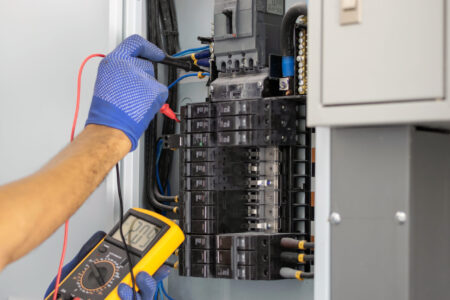
Since the visual cues and immediate results are similar, the true differentiation requires specialized knowledge and tools. A professional electrician knows how to safely open the electrical panel, inspect the bus bar (the metal bar the breaker connects to), use a thermal imaging camera to locate hot spots, and apply a multimeter to check voltage drop, all steps that clearly isolate the problem to the breaker itself, the wiring, or the panel connections.
The difference between a worn-out failure and an immediate faulty failure is often only determined after the initial signs appear and an expert performs a full diagnostic.

What Are the 7 Critical Warning Signs That Require Immediate Electrical Repair?
Regardless of whether your breaker is simply worn out or truly faulty, if you notice any of the following seven warning signs, it is an immediate call for Magic Electric, Plumbing, Heating & Air. These symptoms indicate a critical breakdown in your home’s electrical protection system.
- The Breaker Won’t Stay Reset: This is arguably the most definitive sign of a problem. If you flip the switch to the “on” position and it immediately snaps back to “off” or the tripped position, it indicates either a severe and persistent short circuit in the line or a total internal mechanical failure within the breaker itself. Do not try to hold the switch in place. Doing so bypasses the safety mechanism.
- Burning Smell or Odor of Ozone: If you detect a distinct acrid or smoky smell, similar to burnt plastic or ozone, coming from the electrical panel, shut off the main power to the house immediately. This smell is produced by overheating wires or melting insulation, often from a loose connection (a severe fault).
- Excessive Heat or Hot to the Touch: It’s normal for a breaker to be slightly warm during heavy use. However, if a specific breaker or the entire panel feels hot to the touch, it is generating unsafe levels of heat. This requires immediate professional investigation to prevent potential fire damage to the sensitive connections inside the panel.
- Visible Physical Damage or Scorch Marks: Any discoloration, scorch marks, bubbling, or melted plastic on the breaker housing, the outlet, or the area surrounding the electrical panel indicates that extreme heat has been generated. This visual evidence confirms a severe fault has occurred.
- Buzzing, Crackling, or Popping Sounds: Healthy electrical systems should operate silently. Loud or unusual noises, such as buzzing, humming, or crackling sounds emanating from the panel are usually caused by a poor connection or arcing (sparks jumping gaps). Arcing significantly increases fire risk.
- Flickering or Dimming Lights: If lights on a specific circuit frequently flicker, dim, or suddenly surge, it suggests a problem with the voltage regulation or intermittent connectivity, which can be linked back to a worn-out or poorly connected breaker.
- Power Loss Without a Tripped Breaker: In rare but dangerous instances, a breaker can fail internally while the switch lever remains in the “on” position. If a room or appliance loses power, but the breaker visually looks fine, the internal mechanism has likely failed and severed the connection while being unable to show the tripped state.
How Does Magic Electric, Plumbing, Heating & Air Diagnose the True Problem?
When you call a professional from Magic Electric, Plumbing, Heating & Air, we don’t just guess whether the breaker is worn-out or faulty. We follow a systematic, safety-first diagnostic process to determine the root cause of the problem. This expert approach ensures that the correct, lasting repair is performed and that your home’s safety is fully restored.
Here are the key steps our licensed technicians take when assessing a bad breaker:
1. External and Visual Inspection
Our first action is to conduct a safety-conscious, non-contact inspection. We look for all the critical external signs mentioned above.
- We use non-contact instruments, such as a thermal imaging camera, to visually map the temperature distribution inside and around the panel cover. High-temperature hot spots instantly point to high-resistance areas, which are usually indicative of loose connections (a faulty condition) or severe contact damage (a worn-out condition).
- We check the physical feel of the breaker switch. A worn-out breaker often feels loose, mushy, or spongy, lacking the firm click of a healthy unit.
2. Circuit and Load Analysis
If the breaker trips intermittently, we need to know why it is tripping. We assess the electrical conditions surrounding the breaker to confirm the source of the fault or trip.
- Load Test: We measure the actual amperage being drawn on the circuit while devices are operating. If the current is below the breaker’s rating (e.g., 12 Amps on a 15-Amp breaker) and it still trips, we confirm the breaker is worn out and too sensitive due to internal fatigue.
- Wiring Check: We use specialized tools to check for subtle ground faults, short circuits, or other signs of faulty wiring along the connected line that could be causing the trips, ensuring the problem isn’t hidden elsewhere in the wall. This is a critical step, as a new breaker will fail if the wiring problem isn’t addressed first.
3. Verification and Replacement
Once the diagnosis confirms the breaker is the problem, whether due to age-related wear or immediate damage, we proceed with the safest solution: replacement.
- We adhere strictly to safety protocols, shutting off the main power before any work is performed.
- The old breaker is removed, and its terminal connections are inspected for signs of melting or pitting on the bus bar connections, the main electrical artery of the panel. This often confirms if a severe fault, such as high-resistance heating, was the root cause.
- A new, correctly rated breaker is installed and torqued down to the manufacturer’s specifications. Proper torque prevents dangerous loose connections from reoccurring and ensures maximum conductivity, which is key to long-term reliability.
By prioritizing thorough diagnostics over immediate replacement, Magic Electric, Plumbing, Heating & Air ensures we are addressing the cause, not just the symptom, delivering the long-term safety and reliability you deserve.
Conclusion
Understanding the difference between a worn-out circuit breaker and a truly faulty circuit breaker helps you gauge the urgency of the repair, but ultimately, both conditions lead to the same definitive professional recommendation: replacement is necessary.
A worn-out breaker, defined by its age and mechanical fatigue, represents unreliable protection, it may trip when it shouldn’t, or worse, fail to trip when it absolutely must. This is a failure of time. A faulty breaker, caused by severe damage like corrosion or loose connections, often presents an immediate, active danger, typically signaled by heat and smell. This is a failure of circumstance.
In either scenario, the decision to call a licensed electrician is the most critical step you can take. Circuit breaker repair and panel work are not DIY projects. Attempting to force a breaker on or performing your own diagnostics can lead to electrical shock, fire, or catastrophic damage to your entire electrical panel. The complexity of these devices and the inherent danger of working with live electricity require expert training and licensed assurance.
For your peace of mind and the safety of your home, trust the skills, knowledge, and tools of the experts. Contact Magic Electric, Plumbing, Heating & Air for your plumbing and electrical repair needs. We provide hassle-free scheduling, upfront pricing, and guaranteed customer satisfaction to ensure your home’s electrical system is safe, sound, and ready to handle your modern demands. Don’t wait until a small issue becomes a massive safety hazard, schedule your inspection today.
Worn-Out vs. Faulty Circuit Breaker: Frequently Asked Questions (FAQ)
What is the lifespan of a standard circuit breaker before it becomes “worn out”?
The lifespan of a standard thermal-magnetic circuit breaker is typically between 30 and 40 years. However, this longevity can be significantly reduced by environmental factors (like heat and moisture) or continuous overuse (frequent tripping due to overloads). Specialized breakers like GFCI and AFCI breakers, which contain more sensitive electronics, often have a shorter life span, sometimes needing replacement after 15 to 25 years. We recommend a professional inspection of your electrical panel if it is over 20 years old to check for signs of age-related wear.
Is it dangerous if my circuit breaker is hot to the touch?
Yes, a circuit breaker that is excessively hot to the touch is a serious warning sign and requires immediate attention. Circuit breakers can be slightly warm under normal operation, but they should never be hot. Excessive heat is caused by high electrical resistance, which usually indicates a dangerous condition, such as a loose wire connection at the terminal screw or severe internal contact degradation. This condition can quickly lead to melted insulation, arcing, and an electrical fire if ignored. You should shut off the main power to the house if safe to do so, and contact a professional electrician immediately.
Can I reset my circuit breaker multiple times if it keeps tripping?
While it is safe to reset a breaker once after it trips (assuming you have unplugged high-demand appliances), you should never repeatedly reset a breaker that continues to trip immediately. If the breaker trips again, it is protecting your system from a dangerous, persistent fault, such as a short circuit or an extreme overload. Continually resetting it forces current through the fault, which increases the internal damage to the breaker and significantly raises the risk of starting a fire within the wall or the electrical panel. Stop resetting and call a professional from Magic Electric, Plumbing, Heating & Air.
How can a circuit breaker fail without tripping the power?
A circuit breaker can fail without tripping the power, typically when its internal mechanism suffers catastrophic damage that locks the switch lever in the “on” position. This is often referred to as a welded contact failure. In this case, the internal contacts have fused together due to previous arcing or heat. If a subsequent short circuit or overload occurs, the breaker cannot physically move to the tripped position, and current flows unchecked. This scenario is extremely dangerous because the home has lost its primary defense against electrical faults.
Why do “loose connections” cause a breaker to fail?
Loose connections are one of the most common causes of dangerous breaker failure. When a wire is not securely fastened to the breaker’s terminal screw, the small gap or poor contact creates high electrical resistance. Electricity flowing across this resistance generates excessive heat. This heat can melt the wire insulation and the plastic housing, severely damaging the breaker and the bus bar connection in the panel, leading to a serious fire hazard. This is why professional installation and inspection are vital, to ensure proper torque and connection stability.