
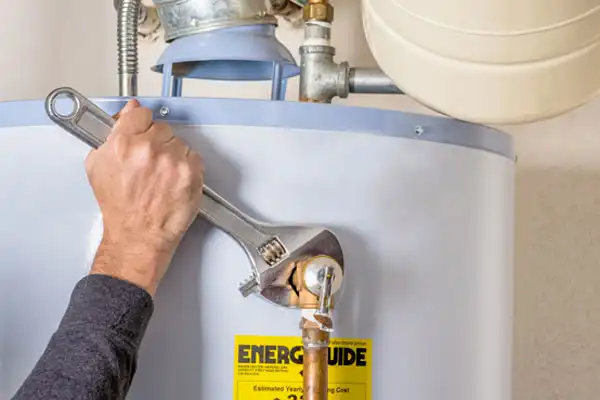
Running out of hot water is more than just an inconvenience; it’s a sudden, frigid interruption to your morning routine. This surprisingly common issue is often caused by improper water heater sizing.
Selecting a new water heater is not about grabbing the biggest tank you can fit into your closet. It is a precise calculation based on your home’s unique hot water needs. Get the sizing wrong, and you will either pay too much in energy costs for an oversized unit or suffer through cold showers with one that is too small.
Our guide, brought to you by The Magic Team, simplifies the complex world of water heater mathematics. We’ll show you exactly how to match your family’s specific demand to the perfect new water heater.
Why is Accurate Water Heater Sizing Essential for Your Home?
Accurate water heater sizing is the single most important factor determining your home’s comfort, energy efficiency, and system longevity. Choosing the right size ensures that you always have an ample supply of hot water, especially during peak usage times.
An improperly sized unit will cost you money and cause significant frustration. If your unit is too small, it will struggle to meet demand. This forces it to run almost constantly, leading to premature wear and tear on components, a shorter lifespan, and higher energy bills.
If your unit is dramatically oversized, the tank will be heating water you never use. This results in standby heat loss, meaning wasted energy and unnecessary expense. The goal of proper sizing is achieving the ideal balance between initial capacity and energy-efficient performance.
- Comfort is King: Correct sizing means your entire family can shower, run the dishwasher, and do a load of laundry without the water suddenly turning cold.
- Efficiency Drives Savings: A perfectly sized unit minimizes the energy required to meet your hot water needs, reducing utility bills dramatically.
- Longevity Matters: When a water heater is not constantly overworked, its internal components last longer, delaying the need for costly repairs or an early replacement.
- Cost Control: Avoiding standby energy losses and minimizing strain keeps both operating costs and long-term ownership costs firmly in check.
Proper sizing is the foundation of a reliable and high-performing hot water system.

What Key Metrics Determine the Right Size Water Heater?
To properly size a water heater, experts rely on two main metrics: the First Hour Rating (FHR) for traditional storage tank models and Gallons Per Minute (GPM) for tankless, on-demand systems.
Traditional Tanked Water Heaters: The First Hour Rating (FHR)
The FHR is the most critical measurement for a storage tank water heater. It represents the total number of gallons of hot water the heater can deliver in an hour, starting with a full tank. This number is far more important than the tank size printed on the side.
The FHR is a combination of two variables: the tank’s raw storage capacity and the recovery rate. The recovery rate is how quickly the heater can heat a fresh tank of cold water after a draw.
A water heater might have a large tank, but if it has a slow recovery rate, its FHR might be lower than a slightly smaller tank with a powerful burner or heating element. When sizing a tanked unit, homeowners should always prioritize the FHR number over the simple tank capacity (e.g., 40-gallon, 50-gallon).
The FHR is based on two main components:
- The stored hot water ready for use in the tank.
- The recovery rate, which is the speed at which incoming cold water is heated to the desired temperature.
The ultimate goal when sizing a tanked unit is simple: Your chosen water heater’s FHR must meet or exceed your household’s peak hour demand (P.H.D.).
Tankless Water Heaters: Gallons Per Minute (GPM)
Tankless water heaters, also known as on-demand systems, do not store hot water. Instead, they heat water instantly as it passes through the unit when a hot water tap is opened.
The key sizing metric for tankless units is the Gallons Per Minute (GPM) flow rate. This metric indicates how much hot water the unit can continuously produce, forever, without running out.
For tankless systems, the required GPM must be high enough to satisfy all running hot water fixtures simultaneously during your household’s peak usage time. There is no tank capacity to worry about, but there is a risk of a noticeable temperature drop if the total flow rate of running fixtures exceeds the unit’s maximum GPM.
The GPM output is directly determined by the required temperature rise. This is the difference between the cold incoming water temperature, which can be very cold in winter, and the desired hot water output temperature (usually 120°F).
In colder climates like Idaho, where incoming water temperatures drop significantly, a higher temperature rise is necessary. This requirement will, unfortunately, reduce the unit’s maximum GPM output. Therefore, you must factor in the lowest ambient groundwater temperature for your area when selecting a tankless unit.
How Do My Family’s Usage Habits Impact Water Heater Sizing?
Your water heater is sized specifically to handle the brief but intense period when everyone in your home needs hot water simultaneously. This is your peak hour demand (P.H.D.). Ignoring your family’s actual habits will inevitably guarantee a sizing failure.
To find your P.H.D., you’ll need to calculate the maximum volume of hot water needed during the single busiest hour of the day. For most families, this intense hour occurs either in the morning before school and work or in the evening around dinner and bedtime.
The first step in calculating P.H.D. is creating an inventory of your fixtures and assigning a standard usage volume. Here is a common approximation for hot water usage per appliance draw:
- A typical 10-minute shower uses around 10 gallons of hot water.
- Filling a standard bathtub requires approximately 20 gallons.
- Running a dishwasher cycle typically uses about 14 gallons of hot water.
- Running a washing machine on a hot setting uses about 12 gallons per load.
- A bathroom sink faucet uses roughly 2 gallons for standard use.
The Peak Hour Demand Calculation
To determine your P.H.D., you’ll need to identify exactly which fixtures are most likely to be running at the exact same time.
For example, let’s imagine a four-person household’s peak hour scenario:
- Person 1 is showering (10 gallons).
- Person 2 is showering (10 gallons).
- The dishwasher is running after breakfast (14 gallons).
- Someone is running a washing machine load (12 gallons).
In this example scenario, the P.H.D. would be the sum of those gallons, which is 46 gallons (10 + 10 + 14 + 12).
For a traditional tanked unit, you would then look for a heater with an FHR of at least 46 gallons. Choosing a unit with an FHR slightly higher, perhaps 50–55 gallons, provides a valuable buffer against unexpected demand fluctuations.
For a tankless unit, the P.H.D. calculation is slightly different but demands higher precision, it focuses on simultaneous flow rate (GPM):
- High-efficiency showerhead: 2.0 GPM
- Second showerhead: 2.0 GPM
- Dishwasher: 1.5 GPM
- Total Required GPM: 5.5 GPM
This means your required tankless unit must be rated for at least 5.5 GPM, after factoring in your local temperature rise correction.
Your water heater should always be sized for this specific P.H.D. If you size it just for the number of people, you risk choosing a unit that is constantly undersized for your actual use patterns. The goal is to accommodate simultaneous use comfortably.
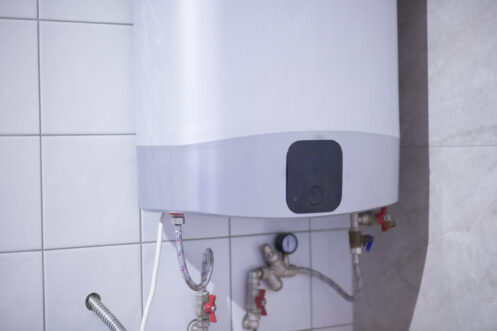
How Do Tankless Water Heaters Change the Sizing Calculation?
The sizing process fundamentally changes when moving from a traditional tank model to an instantaneous tankless water heater. The essential difference is moving from a storage mindset to a flow mindset.
A tanked unit provides a large, ready-to-use volume (the tank), and the FHR measures how long it takes to deplete and restore that volume. A tankless unit has virtually unlimited volume but is constrained by its GPM flow rate.
The primary factor differentiating tankless sizing is the required temperature rise.
Understanding Temperature Rise and GPM
Every tankless unit is rated for its maximum GPM output at a specific temperature rise. For example, a unit might claim a high 9.5 GPM flow rate. However, that 9.5 GPM may only be achievable if the unit is heating the water by a very small amount, perhaps only a 30°F rise.
If you live in a cold area, like Twin Falls, the incoming groundwater temperature might be 40°F in the winter. To heat that water to a comfortable 120°F requires a significant temperature rise of 80°F.
A higher temperature rise requirement drastically reduces the unit’s maximum GPM. A unit rated for 9.5 GPM at a 30°F rise might only deliver 5.0 GPM when faced with an 80°F rise requirement. This is why tankless sizing is highly location-specific and requires knowledge of local climate and the coldest water temperatures in the region.
Advantages of Tankless Sizing
While the calculation is temperature-dependent, tankless units offer unmatched flexibility for high-demand households.
- Continuous Supply: As long as the P.H.D. flow rate is below the corrected GPM, the hot water literally never runs out. This makes it ideal for families with teenagers or homes with deep soaker tubs.
- Energy Savings: Tankless units only activate and heat water when a tap is opened, eliminating standby heat loss completely.
- Space Savings: Tankless units are compact and are easily mounted to a wall, freeing up valuable utility or closet space that a large tank would occupy.
If you have a large home, or a large family that frequently uses multiple fixtures at once, you may need to install a high-capacity unit. Alternatively, you might need to install multiple smaller tankless units installed in parallel or dedicated to different usage zones, such as one unit for the master bathroom and one for the kitchen/laundry area.
Magic Electric, Plumbing, Heating & Air specializes in correcting these complex calculations, ensuring that your tankless system can handle the seasonal temperature drop without sacrificing the required flow rate.
What is the Standard Water Heater Sizing Chart By Household Size?
While professional sizing is always recommended, general sizing guidelines provide a helpful starting point based purely on the number of occupants. These approximations assume standard consumption habits and average fixture use.
These guidelines are meant for traditional storage tank water heaters and should be adjusted if your family has high-end fixtures (like multi-head showers) or non-standard usage patterns. Remember, these recommendations are based on FHR (First Hour Rating), not just the raw tank size.
Standard Sizing Guidelines by Number of People:
- For 1 to 2 People: Your household generally requires a recommended First Hour Rating (FHR) range of 30 to 35 gallons, which corresponds roughly to a 30 to 40-gallon tank capacity.
- For 3 to 4 People: Your household usually needs an FHR of 40 to 50 gallons, which typically means a 40 to 50-gallon tank.
- For 5 People: You should look for an FHR in the 50 to 60 gallons range, often found in 50 to 60-gallon tanks.
- For 6 or More People: A large family will require a significantly higher FHR, typically between 60 to 80+ gallons, which necessitates a larger 60 to 80-gallon tank capacity.
The Case for Personalization
While these guidelines are convenient, they’re limited. You’ll need to personalize the sizing to your reality.
Consider two separate households, both with four people:
- Family A: Takes staggered showers (one in the evening, three in the morning) and runs the dishwasher at midnight. Their peak hour demand is low.
- Family B: Four teenagers who all shower at the exact same time between 7:00 AM and 8:00 AM, while the washing machine is running. Their peak hour demand is extremely high.
Family A might easily get by with a standard 40-gallon unit with a 45 FHR. Family B, however, would likely require a 50-gallon unit with a high-recovery burner to achieve a 70+ FHR, or they may need a highly efficient tankless system. The raw number of occupants does not tell the whole story, as when you use the water is more important than who uses the water.
Before settling on a size from any chart, always apply the P.H.D. calculation method to confirm your specific hourly needs. This is a step where a plumbing professional’s eye is truly indispensable.
When Should I Stop Repairing and Choose Replacement & Sizing?
Knowing when your water heater has reached the end of its reliable service life is just as important as knowing how to size its replacement. Sizing a new unit often goes hand-in-hand with making the informed decision to ditch your old, failing one.
The decision to replace rather than repair is typically based on three key indicators: the unit’s age, the frequency of repairs, and the simple desire for modernization. Continuing to pour money into an aging or undersized unit is a losing financial proposition in the long run.
1. The Age Factor
For most standard tank water heaters, the estimated lifespan is finite, it typically falls between 10 and 15 years. Once your unit crosses the 10-year mark, it is essentially living on borrowed time and performance will decline.
- Corrosion and heavy sediment buildup inside the tank become far more severe after a decade of continuous use.
- The risk of a catastrophic tank failure, leading to a significant and costly water leak, increases exponentially as the unit ages.
- A newer, properly sized unit will feature modern, superior insulation and more efficient burner technology, which can save you significant money on monthly energy bills compared to running an older, less efficient unit.
2. Frequent and Costly Repairs
If you find yourself calling for repair services every six months, or if the cost of a single major repair approaches 50% of the cost of a brand new unit, it is absolutely time to replace the system. Continuing to fix an old water heater is often just a continuous drain on your finances.
Minor repairs, such as replacing the pressure relief valve, fixing a small leak, or changing heating elements, are manageable. However, if the tank is leaking from the bottom, the heat exchanger is failing in a gas unit, or the inner components are heavily rusted, replacement is the only logical and safe course of action for your home.
3. Lifestyle and Home Changes
Major life events or home improvements are the perfect opportunity to upgrade and right-size your system:
- Growing Family: Welcoming a new baby or having family members move back home increases peak demand immediately. Your old unit may suddenly become permanently undersized.
- Remodeling: Installing a new master bathroom with a large soaking tub or multiple showerheads will completely overwhelm the capacity of an older, smaller water heater.
- Moving/Selling: Having a new, properly sized, and fully warrantied water heater is a huge and reliable selling point for new home buyers. Conversely, if you just moved into a new home and the hot water supply is already disappointing, installing a properly sized unit right away is a smart investment in your family’s daily comfort.
If your water heater is nearing the end of its service life, and especially if you’ve noticed poor performance during your family’s peak usage times, a professional consultation is required. Our experts at Magic Electric, Plumbing, Heating & Air can assess the unit’s age and performance to help you make an informed, cost-efficient decision.
Conclusion
Sizing a new water heater is perhaps the most crucial step in any water heater installation project. It’s a calculation that bridges your family’s daily needs with the technical capacity of the equipment. Choosing a unit that perfectly aligns with your household’s peak hour demand ensures you achieve maximum comfort and minimum energy waste.
Remember to prioritize performance metrics like the First Hour Rating (FHR) or Gallons Per Minute (GPM) over the tank size alone. Always factor in your family’s unique, simultaneous usage habits during that single busiest hour of the day.
While this guide provides the formula, executing the perfect installation requires local expertise and professional tools. Our team at Magic Electric, Plumbing, Heating & Air is fully licensed, insured, and ready to guarantee upfront pricing and same-day service to get your hot water flowing perfectly.
Don’t settle for cold showers or unnecessary energy bills. Contact Magic Electric, Plumbing, Heating & Air for your plumbing and electrical repair needs. We’ll ensure your new water heater is the right fit for your family, guaranteed.
Water Heater Sizing: Frequently Asked Questions (FAQ)
What is the most common mistake people make when sizing a water heater?
The single most common mistake is sizing a new unit based only on the number of bedrooms or the size of the old unit, rather than performing a calculation of the home’s Peak Hour Demand (P.H.D.). People commonly underestimate how many gallons they need when multiple appliances, such as a dishwasher, a washing machine, and two showers, are running simultaneously. For example, a 50-gallon tank that only provides 60 gallons of hot water in the first hour (its FHR) may be perfectly fine for four people whose usage is staggered throughout the morning, but it would be completely inadequate for four people who all shower within the same 60-minute window.
How much hot water does a typical shower use?
A typical 10-minute shower using a modern, low-flow showerhead consumes approximately 10 to 12 gallons of hot water. However, older showerheads or high-end luxury showers, like rainfall or multi-jet systems, can easily consume 15 to 20 gallons or more in that same 10-minute period. When calculating your Peak Hour Demand, it is absolutely essential to be honest about the duration of your family’s showers and the actual flow rate of your fixtures.
Is it more efficient to buy a larger water heater to be safe?
No, buying an oversized water heater is not an efficient way to “play it safe.” An oversized tank will be heating and storing a large volume of water that is rarely, if ever, used, which is a major source of wasted energy. This process results in significant standby heat loss, which means the unit cycles on unnecessarily just to keep the water warm in the tank. This wastes energy and directly raises your monthly utility bills. The key to efficiency is accurate sizing to perfectly match your peak demand, not oversizing for general peace of mind.
Do I need a professional to calculate my water heater size?
While you can perform the initial P.H.D. calculation yourself as a homeowner, consulting a professional plumber is highly recommended for the final sizing and unit selection. The expert plumbers at Magic Electric, Plumbing, Heating & Air can accurately: 1) Account for critical local climate factors, such as cold incoming water temperature (which is essential for tankless GPM calculations), 2) Assess the specific flow rate and efficiency of your home’s existing fixtures, and 3) Translate the calculated P.H.D. into the precise correct First Hour Rating (FHR), ensuring compliance with local codes and proper unit installation.