

Maintaining a comfortable home in Magic Valley means keeping your HVAC system in peak condition. While we often focus on the big components, the furnace itself or the outdoor condenser, one of the most important parts of your system is the furnace filter.
At Magic Electric, Plumbing, Heating & Air, we see it all the time. A homeowner calls us because their furnace is acting up, only for us to find a filter so clogged it looks like a dryer lint trap. Changing your filter is the easiest DIY maintenance task you can perform, yet it’s the one most people forget.
So, how often should you really be swapping it out? Is the “three-month rule” actually true for everyone? Let’s dive into everything you need to know to keep your home comfortable and your air clean.
Is there a standard rule for changing furnace filters?
The most common advice you will hear from manufacturers and HVAC technicians is to change your furnace filter every 90 days. For a standard, 1-inch pleated filter in a “typical” household, this is a solid baseline.
However, “standard” doesn’t apply to every home. Think of your furnace filter like the oil in your car. If you drive through dusty construction zones every day, you’ll need an oil change much sooner than someone who only drives on paved city streets. Your home environment works the same way.
While 90 days is the maximum you should wait, many households find that their filters are ready for retirement at the 30- or 60-day mark. The goal is to catch the dirt before it starts restricting airflow.
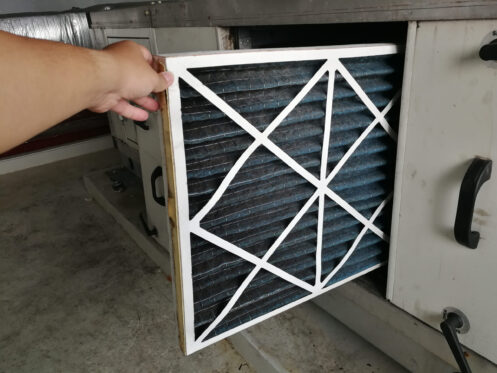
How does filter thickness affect the replacement schedule?
Size matters when it comes to filtration. Furnace filters come in various thicknesses, usually ranging from 1 inch to 5 inches. The thicker the filter, the more surface area it has to trap debris, which generally means it lasts longer.
- 1-inch to 2-inch filters: These are the most common. They have limited surface area and should be checked every 30 days and replaced at least every 1 to 3 months.
- 3-inch to 4-inch filters: These “media” filters are much denser. They typically last 6 to 9 months.
- 5-inch filters: These are the heavy hitters. Because they are so deep, they can often go 9 to 12 months before needing a replacement.
Always check your specific HVAC unit’s requirements.
Do pets and allergies change the timeline?
If you share your home with furry friends, your filter is working double-time. Pet hair and dander are much larger and more frequent than standard dust particles. In a home with one cat or dog, we recommend changing a standard 1-inch filter every 60 days. If you have multiple pets or a breed that sheds heavily, you should look at your filter every 30 days.
Similarly, if anyone in your household suffers from asthma or allergies, you want the cleanest air possible. In these cases, waiting 90 days allows too many allergens to circulate. Changing the filter every 30 to 45 days ensures that the “lung” of your home is always fresh and effective at trapping pollen, mold spores, and fine dust.
What role does the MERV rating play in filter life?
MERV stands for Minimum Efficiency Reporting Value. It’s a scale from 1 to 20 that measures how well a filter traps particles.
- MERV 1–4: Basic fiberglass filters. They protect the furnace from big dust bunnies but don’t do much for air quality. These clog slowly but offer poor filtration.
- MERV 8–11: The “sweet spot” for most residential homes. These trap dust, dander, and some allergens without suffocating your furnace. These should be changed every 2–3 months.
- MERV 13 and higher: High-efficiency filters that trap bacteria and smoke. Because they are so “tight,” they catch everything, which means they clog much faster. If you use a high-MERV filter, you must monitor it closely, as a clog can quickly lead to system overheating.
What are the warning signs of a dirty furnace filter?
Sometimes you don’t need a calendar to tell you it’s time for a change. Your home and your furnace will give you clues that the filter is reaching its limit. Keep an eye out for these red flags:
- The “Gray” Test: If you pull the filter out and it’s no longer white or yellow but a dingy gray, it’s done. If you can’t see light through it when holding it up to a lamp, it’s definitely time to swap.
- Dusty Surfaces: Do you feel like you just dusted yesterday, but your coffee table is already covered in a fine layer of gray? A clogged filter can’t trap new dust, so it just blows it back into your rooms.
- Strange Smells: A dusty, “burning” smell when the furnace kicks on can indicate that dust is settling on the heating elements because the filter is no longer doing its job.
- Higher Energy Bills: If your gas or electric bill takes a sudden jump without a change in the weather, your furnace might be struggling to pull air through a dirty filter, using more energy in the process.
Why is it dangerous to ignore a clogged filter?
Changing a filter is cheap, while replacing a furnace is not. Ignoring a dirty filter leads to a chain reaction of problems that can eventually lead to expensive HVAC repairs or replacement.
- Short-Cycling: When air can’t pass through the filter, heat builds up inside the furnace. To prevent a fire, a safety device called a “limit switch” shuts the system down. The system then cools, restarts, and shuts down again. This constant on-and-off wears out parts incredibly fast.
- Blower Motor Failure: The fan (blower motor) has to work significantly harder to pull air through a thick mat of dust. This extra strain can cause the motor to burn out prematurely.
- Frozen Coils: During the summer, a clogged filter can actually cause your AC coils to freeze over because there isn’t enough warm air flowing over them to prevent ice formation.
- Poor Air Quality: Eventually, a filter becomes so full that it can no longer hold onto the debris. At that point, you’re breathing in everything the filter was supposed to catch.
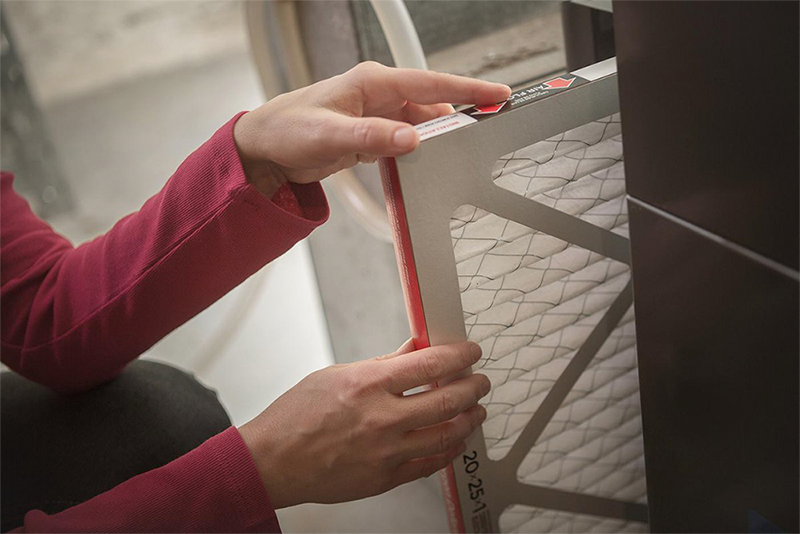
How do you properly change a furnace filter?
Ready to do it yourself? Follow these simple steps to ensure you do it safely and correctly:
- Turn off the power: Switch your thermostat to “Off” or flip the power switch on the side of the furnace. This prevents the system from kicking on while you have the filter out.
- Locate the filter: It is usually found in a slot where the return air duct meets the furnace.
- Note the size: Look at the dimensions printed on the side of the old filter (e.g., 16x25x1).
- Check the airflow arrow: This is the most important step! Filters have an arrow that shows which way the air should flow. The arrow should always point toward the furnace (the blower motor).
- Slide in the new filter: Ensure it fits snugly without gaps.
- Turn the power back on: Reset your thermostat and you’re good to go!
Is a more expensive filter always better?
Not necessarily. While high-MERV or HEPA filters are great for air quality, they create more “static pressure” or resistance. If your furnace is older or wasn’t designed for a high-resistance filter, using one can actually cause the system to overheat or break down.
For most homes, a mid-range pleated filter (MERV 8 to 11) provides the best balance of air cleaning and system performance. If you aren’t sure what your system can handle, give us a call at Magic Electric, Plumbing, Heating & Air for a professional assessment.
Conclusion: Making maintenance a habit
Changing your furnace filter is a small task that can yield huge rewards. By spending five minutes every few months, you’re protecting your wallet from high energy bills, shielding your family from allergens, and extending the life of your expensive HVAC equipment.
If you’ve checked your filter and it’s clean, but your furnace is still making strange noises or failing to keep you warm, it might be time for professional furnace maintenance. At Magic Electric, Plumbing, Heating & Air, we’re here to help with all your HVAC, plumbing, and electrical needs. Don’t wait for a breakdown, schedule your seasonal tune-up today!
Furnace Filter Change: Frequently Asked Questions (FAQ)
Q: Can I wash and reuse my furnace filter?
A: Only if it is specifically labeled as “washable” or “electrostatic.” Most residential filters are disposable and made of paper or fiberglass; getting these wet will ruin them and could lead to mold growth in your system.
Q: What happens if I put the filter in backward?
A: Filters are designed to be sturdy on one side to prevent the material from being sucked into the furnace. If installed backward, the filter could collapse or even get pulled into the blower motor, causing a major repair.
Q: Why does my filter get dirty so fast?
A: If you find your filter is black or heavy with dust every 30 days, it could be due to leaky ductwork pulling in attic or crawlspace dust, frequent use of a fireplace, or construction projects in your neighborhood.
Q: Should I change my filter even if it looks clean?
A: If it’s been 90 days, yes. Some fine particles like pollen or smoke are invisible to the naked eye but can still clog the pores of the filter material over time.
Q: Is a fiberglass filter enough?
A: Fiberglass filters (usually the blue, see-through ones) are meant to protect the furnace from large debris, not to clean the air you breathe. If you want to reduce dust or allergens in your home, upgrade to a pleated filter.