
As we move through 2026, the way we cool our homes is changing faster than ever. Modern air conditioning is no longer just about a box outside making cold air. It’s now become a sophisticated blend of AI-driven controls, eco-friendly refrigerants, and advanced air purification.
Whether you’re dealing with a sudden breakdown or just want to stay ahead of the summer heat, understanding your system is the first step to a stress-free home. Let’s walk through the essential AC troubleshooting steps, the latest 2026 industry trends, and the smart ways to keep your system running at peak performance.
Is your AC not turning on at all?
Before you panic, there are several simple checks you can perform that don’t require a professional. Often, the culprit is a small oversight rather than a major mechanical failure.
- Check the Thermostat: In 2026, many thermostats are smart or AI-powered. Ensure it hasn’t lost its Wi-Fi connection or suffered a software glitch. Sometimes a simple “hard reset,” turning it off and back on, can sync the system.
- Power and Breakers: High-efficiency systems can still trip a circuit breaker during a power surge. Check your home’s electrical panel. If the breaker for the AC is in the “off” or “neutral” position, flip it back.
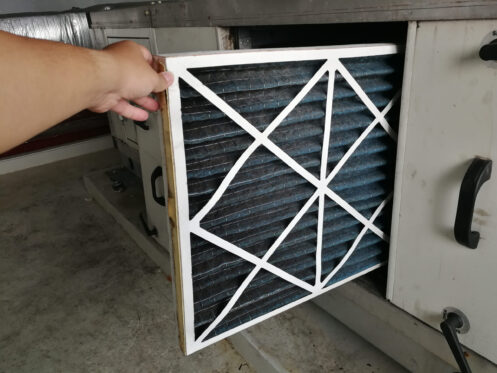
- Air Filters: A clogged filter is the leading cause of system shutdowns. If the filter is caked in dust, the system may shut down to prevent the motor from overheating.
- The Safety Switch: Most indoor units have a “float switch” in the drain pan. If your condensate line is clogged with algae or debris, the pan fills with water, and the switch cuts power to the AC to prevent a flood in your home.

Why is the air coming out of your vents warm?
It is incredibly frustrating to feel a breeze that isn’t actually cooling you down. When your AC blows warm air, it usually points to an airflow or heat exchange problem.
- Check the Outdoor Unit: Ensure your outdoor condenser isn’t “suffocating.” Clear away weeds, leaves, or any debris within two feet of the unit.
- Thermostat Settings: Double-check that your thermostat is set to “Cool” and not just “Fan.” In “Fan” mode, the air circulates without the compressor actually cooling it.
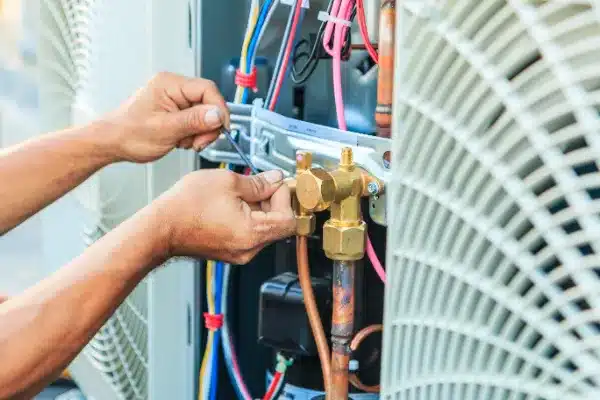
- Ice on the Lines: Look at the copper pipes leading to your outdoor unit. If you see frost or ice, your system is likely frozen. This is usually caused by restricted airflow (dirty filters) or low refrigerant.
- Refrigerant Levels: 2026 marks a major shift toward R-454B and other low-impact refrigerants. If your system is older and leaking, you may face higher repair costs due to the phase-out of older chemicals.
What do those strange AC noises really mean?
Your AC should be a quiet companion in the background. If it starts “talking” to you, listen closely, because the type of sound it makes is a direct clue to the problem.
- Squealing or Screeching: This often points to a worn-out fan belt or a motor bearing that is starting to fail.
- Banging or Clanking: This usually indicates a loose part, like a connecting rod or a fan blade, hitting something inside the housing.
- Hissing: A hissing sound is a classic sign of a refrigerant leak. Because modern refrigerants are under high pressure, they make a distinct sound when escaping.
- Clicking: If you hear rapid clicking when the unit tries to start, it’s likely an electrical issue, such as a failing capacitor or a faulty starter relay.
How does smart technology change AC repair in 2026?
The biggest difference between an AC in 2020 and one in 2026 is intelligence. Today’s systems are designed to tell you they’re struggling before they actually break down.
- Predictive Diagnostics: Many 2026 models feature built-in sensors that track “cycles.” If the system notices it’s running 20% longer than usual to reach the same temperature, it will send a notification to your smartphone.
- Remote Monitoring: Companies like Magic Electric, Plumbing, Heating & Air can now often see your system’s performance data remotely. This allows technicians to arrive at your home already knowing which part they need to bring.
- Automated Zoning: Smart dampers in your ductwork now automatically adjust to cool only the rooms you are using, which reduces the overall load on your compressor and prevents premature wear.
Can you fix a leaking AC yourself?
Water around your indoor unit is a common sight, but it shouldn’t be ignored. While some causes are DIY-friendly, others require a professional.
- The Clogged Drain Line: You can often clear a clogged condensate drain yourself using a wet/dry vacuum to suck out the “sludge” from the outside exit point of the pipe.
- The Cracked Drain Pan: Over time, the plastic or metal pan under your evaporator coil can rust or crack. This usually requires a professional replacement.
- The Frozen Coil: As mentioned earlier, a frozen coil will eventually melt, leading to a large volume of water that can overwhelm your drain pan. Turn the system off and let it thaw completely before calling a technician.
When is it time to stop repairing and start replacing?
The “Repair vs. Replace” debate is more complex in 2026 due to new energy efficiency standards (SEER2) and refrigerant regulations.
- The 50% Rule: If a single repair cost is more than 50% of the value of the entire system, it’s almost always better to replace it.
- Frequent Breakdowns: If you’ve called for repairs more than twice in the last two seasons, it’s likely time for a replacement.
- Rising Utility Bills: Older systems lose efficiency every year. If your cooling bills are 30% higher than they were three years ago, a new high-efficiency heat pump could pay for itself in energy savings within a few years.
- Age Matters: Most systems are designed to last 15 to 20 years. If your unit is approaching its 15th birthday, the next major repair is likely just around the corner.
Why is indoor air quality (IAQ) a major part of 2026 repairs?
In 2026, air conditioning isn’t just about temperature, it’s about health. Modern repairs often involve the “lungs” of your home.
- Advanced Filtration: Upgrading to HEPA or MERV-13 filters can remove up to 99% of allergens and viruses, but they require your fan motor to be in top shape to handle the extra resistance.
- UV-C Light Integration: Many homeowners are now installing UV lights inside their AC coils to kill mold and bacteria before they can blow into the living space.
- Humidity Control: High humidity makes 75 degrees feel like 80. Modern AC repairs often include calibrating whole-home dehumidifiers that work in tandem with your cooling system.
How do you find the right pro for the job?
When DIY isn’t enough, you need a team that understands the complexities of 2026 HVAC technology. Magic Electric, Plumbing, Heating & Air has built a reputation on transparency and expertise.
- Expert Technicians: Our team is trained on the latest variable-speed systems and AI-integrated controls.
- Upfront Pricing: You’ll never be surprised by a bill. We provide clear, honest estimates before any work begins.
- The Magic Care Club: Proactive homeowners join our club to receive priority scheduling and regular maintenance, ensuring that “emergency” calls become a thing of the past.
- Same-Day Service: We know that a broken AC is an emergency in the summer heat, which is why we offer rapid response times to get your home back to a comfortable temperature.
Conclusion
Navigating AC repairs in 2026 doesn’t have to be overwhelming. By staying on top of simple maintenance like filter changes and listening for early warning signs like strange noises, you can avoid the most expensive breakdowns. Remember, your AC is a significant investment in your home’s value and your family’s comfort. When things go wrong, or when you’re ready to upgrade to the latest energy-efficient technology, contact the experts at Magic Electric, Plumbing, Heating & Air to keep your home running like magic.
FAQ: Common 2026 AC Questions
How often should I change my air filters in 2026?
While the old rule was every three months, the higher pollution and pollen levels we see today mean you should check your filter monthly. If you have pets or suffer from allergies, a monthly change is highly recommended to protect both your health and your system’s motor.
What is the new refrigerant used in 2026?
The industry is transitioning toward R-454B and R-32, which have a much lower Global Warming Potential (GWP) than the previous R-410A. If you have a system installed before 2025, it likely uses R-410A, which is becoming more expensive as it is phased out.
Is it worth getting a smart thermostat?
Yes. Beyond the convenience of phone control, smart thermostats in 2026 use AI to learn your habits and the thermal properties of your home. This can reduce energy consumption by 10-15% and provide early warning alerts for system failures.
Why does my AC smell like dirty socks?
This is often called “Dirty Sock Syndrome.” it is caused by bacteria and mold buildup on the evaporator coil. A professional cleaning and the installation of a UV-C light system can usually eliminate this odor permanently.
Can Magic Electric also help with my other home systems?
Absolutely. While we’re experts in HVAC, we’re also a full-service provider for plumbing and electrical repairs. From fixing a tripped breaker to installing a new tankless water heater, our team is equipped to handle all your home’s critical infrastructure.